|
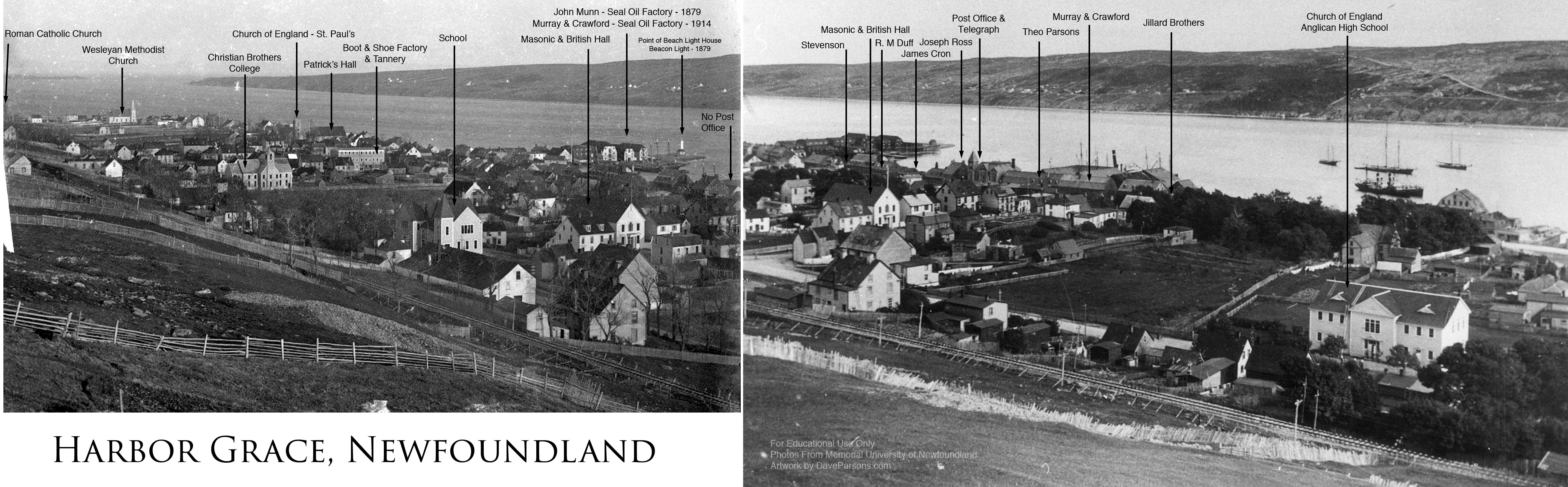
Outport town of Harbor Grace, Newfoundland
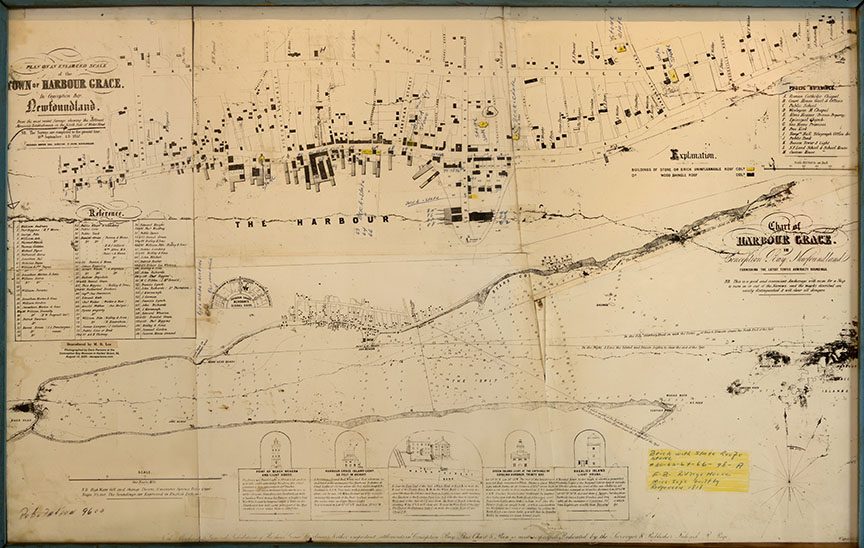
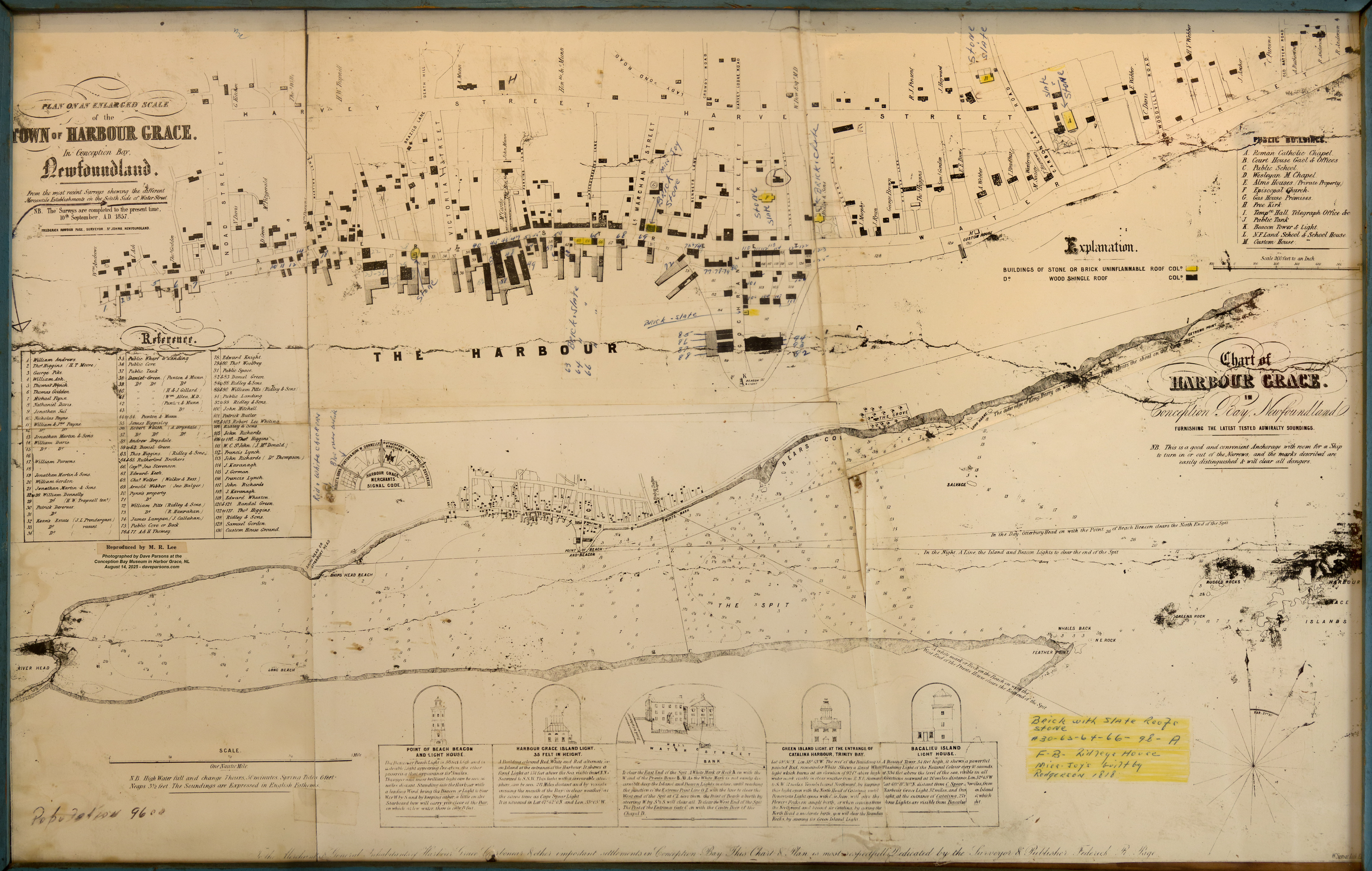
1857 Harbor Grace Map - Photographed from the Conception Bay Museum in Harbor Grace during my visit on August 14, 2025
Download the original version of the Harbor Grace map as well as maps of St. Johns from the The Rooms archives.
Plan on an Enlarged Scale of the
Town of Harbor Grace in Conception Bay Newfoundland
From the most recent Surveys showing the different Mercantile Establishments on the South Side of Water Street.
NB. The Surveys are completed to the present time, 10th September, AD 1857.
Frederick Rowden Page, Surveyor, St. Johns, Newfoundland
|
1. William Andrews
2. Thomas Higgins (H. T. Moore)
3. George Pike
4. William Ash
5. Thomas French
6. Thomas Godden
7. Michael Flynn
8. Nathaniel Davis
9. Jonathan Neil
10. Nicholas Payne
11. William and Jno Payne
12 same
13. Jonathan Martin and Sons
14. William Davis
15. same
16. William Parsons
17. same
18. same
19. Jonathan Martin and Sons
20. William Gordon
21. Jonathan Martin and Sons
22 to 28 William Donnelly
29. same (H.W. Trapnell tennent)
30. Patrick Devereux
31. same
32. Kean's Estate (J.L. Predergast)
33. same (vacant)
34. same (vacant) |
35. Public Wharf and Landing
36. Public Cove
37. Public Tank
38. Daniel Green (Punton and Munn)
39. same (Punton and Munn)
40. same (H and J Gillard)
41. same (Wm Allen MD)
42. same (Punton and Munn)
43. same (Punton and Munn)
44. to 54. Punton and Munn
55. James Hippisley
56. Robert Walsh (A. Drysdale)
57. Robert Walsh (A. Drysdale)
58. Andrew Drysdale
59. to 62. Daniel Green
63. Thomas Higgins (Ridley and Sons)
64. and 65. Rutherford Brothers
66. Captain Jno Stevenson
67. Edward Keefe
68. Charles Walker (Walker and Ross)
69. Arnold Webber
70. Pynn's property
71. same
72. William Pitts (Ridley and Sons)
73. same (R. Hanrahan)
74. James Lampen (J Callahan)
75. Public Cove or Dock
76. and 77. A and H Thomey |
78. Edward Knight
79. and 80 Thomas Woolfrey
81. Public Space
82. and 83. Daniel Green
84. to 88. Ridley and Sons
89. and 90. William Pitts (Ridley and Sons)
91. Public Landing
92. to 99. Ridley and Sons
100. John Mitchell
101. Patrick Butler
102. and 103. Robert Lee Whiting
104. Ridley and Sons
105. John Richards
106. to 110. Thomas Higgins
111. W. C. St. John (J.McDonald)
112. Francis Lynch
113. John Richards (D. Thompson)
114. J. Kavanagh
115. J. Gorman
116. Francis Lynch
117. John Richards
118. J Kavanagh
119. Edward Wheaton
120. and 121. Randal Green
122. to 127. Thomas Higgins
128. Ridley and Sons
129 Samuel Gorden
130 Custom House Ground
|
A. Roman Catholic Chapel
B. Court House Gaol and Offices
C. Public School
D. Wesleyan M. Chapel
E. Alms Houses (Private Property)
F. Episcopal Church
G. Gas House Premises
H. Free Kirk
I. Tempce Hall Telegraph Office etc.
J. Public Tank
K. Beacon Tower and Light
L. N.F.Land School and School House
M. Custom House
|
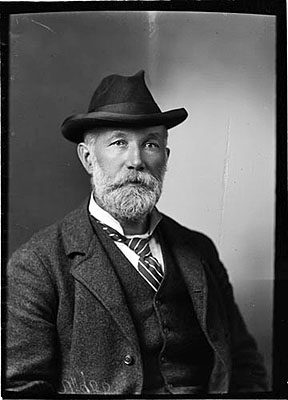
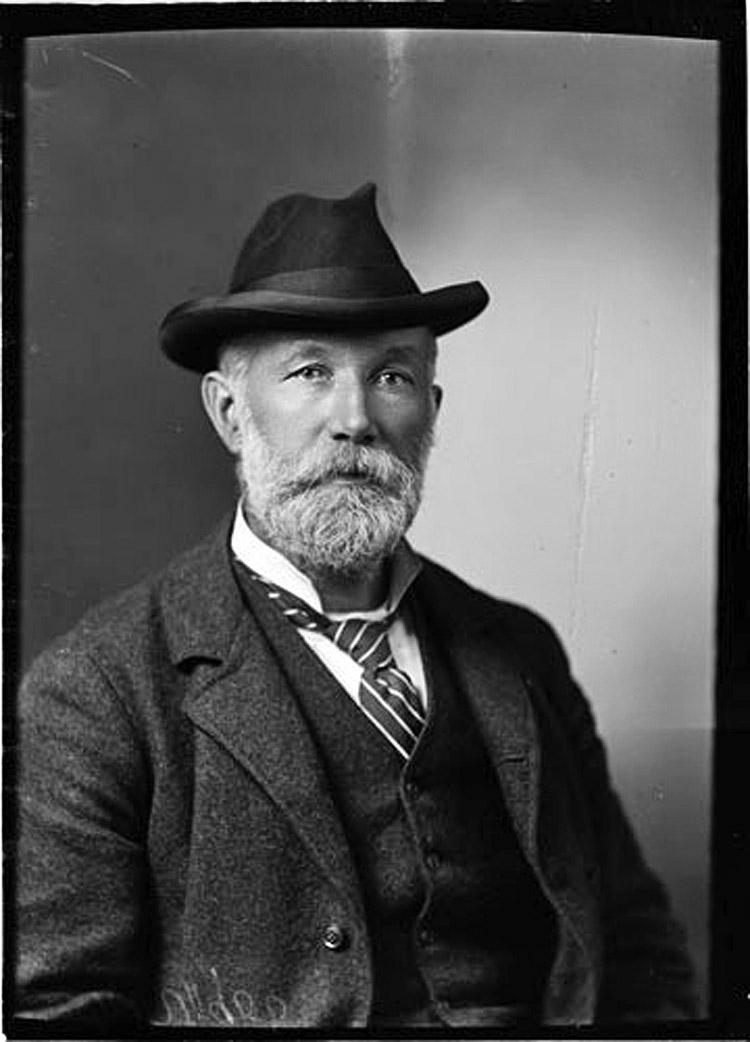
Looking dapper in his striped tie, hat and thick beard (which he had throughout much of his life), a portrait of Simeon Henry Parsons was taken in his studio in St. Johns later in his years. Photo from The Rooms Collection. |
Harbor Grace Photographers and Furniture Makers
Simeon Henry Parsons was a carpenter, shipbuilder, cabinetmaker, upholsterer and most importantly, a photographer, leaving behind a significant photographic record of Newfoundland history.
Born on March 9, 1844 in Harbour Grace, Newfoundland, Simeon was the son of John Charles Parsons, a fisherman, and Mary Ann Bradbury. Simeon married on March 29, 1866 to Isabella Robbins of Bonavista, Newfoundland, and they had they had three sons and two daughters, William, Charles, George, Annie and Jessie.
Growing up in Harbor Grace during the 1850s, a young and imaginative Simeon Parsons attended school, but was distracted from mathematical lessons by drawing artistic cartoons of naval battles on his slate. Likewise, artistic endeavors were not to be explored and "punishment given to the schoolboy was heavy and the encouragement given to the artist was not evident."
However, when he was only nine years old in 1853, "the first daguerrotype photograph appeared at Harbor Grace." Facinated by the new technology that produced such a beautiful picture that "was secured without pencil or brush," his artistic curosity was sparked as he tried to learn more from the photographer by carrying "messages after school hours in hopes of getting at the secret and much desired knowledge."
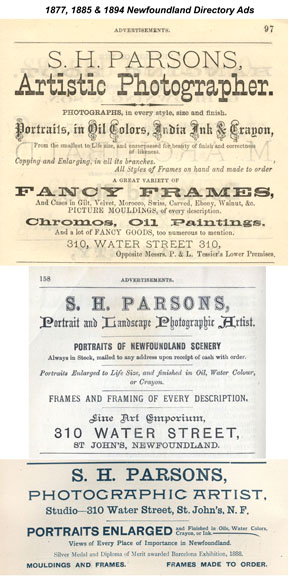
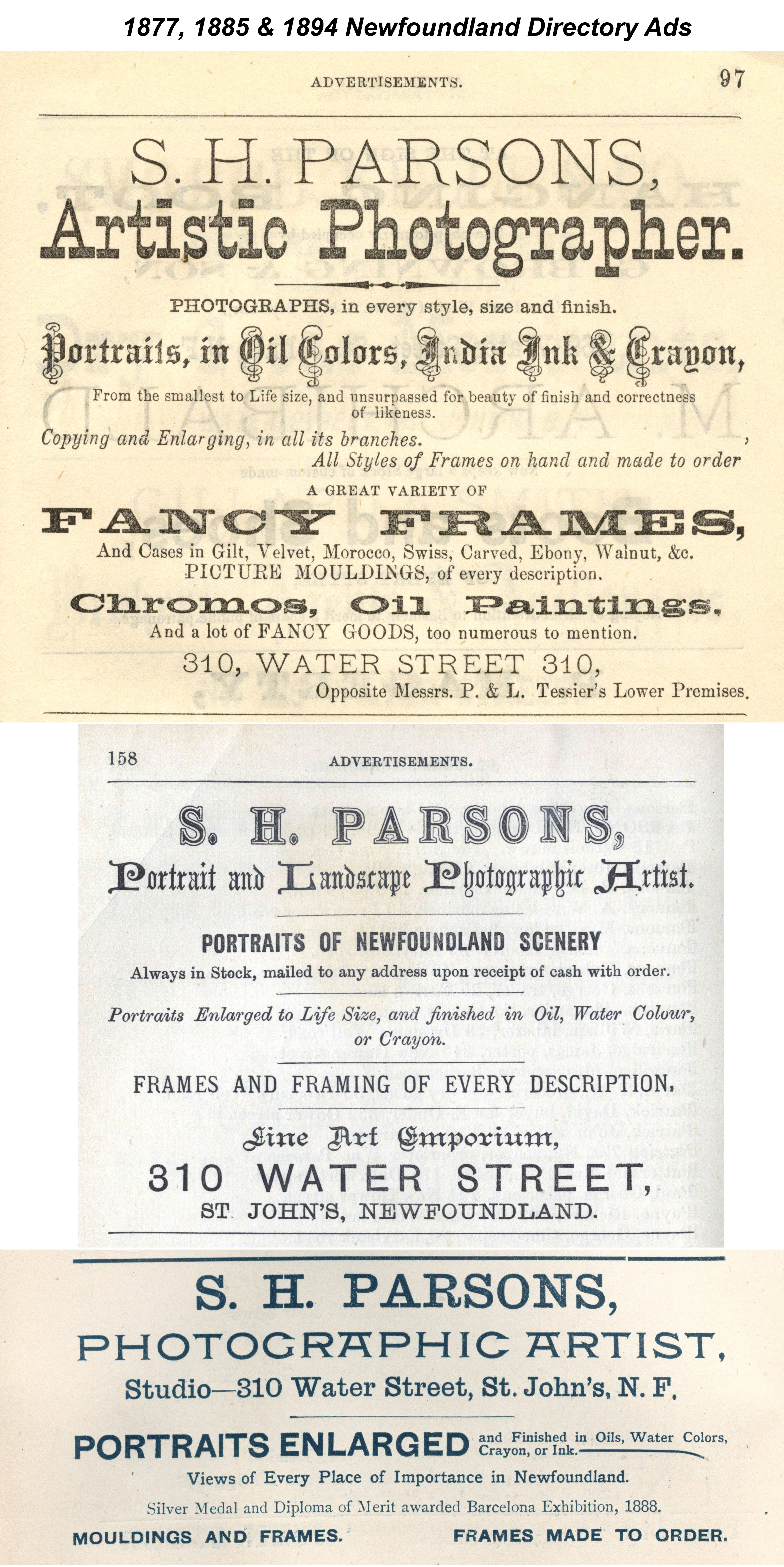
Newfoundland Directory advertisements for the Photographer S. H. Parsons from 1877, 1885 and 1894. Notice the "Portraits, in oil colors, India ink and crayon...in correctness of likeness." The portrait would be called a sun enlargement photo (JPG - Nicholas Parsons from Freshwater) made by projecting a glass negative onto light-sensitive paper using sunlight focused through a lens, then hand-enhancing the low-contrast print with ink, pastels, watercolors, or oils to create a "crayon portrait." The technique was popular in the late 19th and early 20th centuries. They are also known as a charcoal portrait, sketch portrait or pastel photo. From Memorial University of Newfoundland |
The newly introduced invention of photography, which was still quite proprietary, had finaly crossed the pond from Europe as itenerant photographers made their way to various outports. According to editor Edward L. Wilson in The Photographic Journal of America, Vol. 31, 1894, despite his efforts, young Parsons never learned the secret photographic process and "In vain after two busy months the daguerrotypist left for pastures, new carrying his secret with him. Some time afterward he returned this time as an ambrotype and the old arrangement as to messages was renewed but the thirst for photographic knowledge remained unsatisfied. Those who practice photography today have little idea of the closeness with which the old workers kept their method and formulate to themselves... The ambrotypist had left town and there was not a shadow of a chance to get into anything likely to cultivate the artistic side."
It was then Parsons had to figure out how to make a living. "He was apprenticed to the printing trade and set to work upon a weekly newspaper. Unfortunately, the paper took the wrong side in politics and its prosperity dwindled gradually until young Parsons was typesetter proof reader pressman and devil being ultimately stranded upon the wreck of the paper."
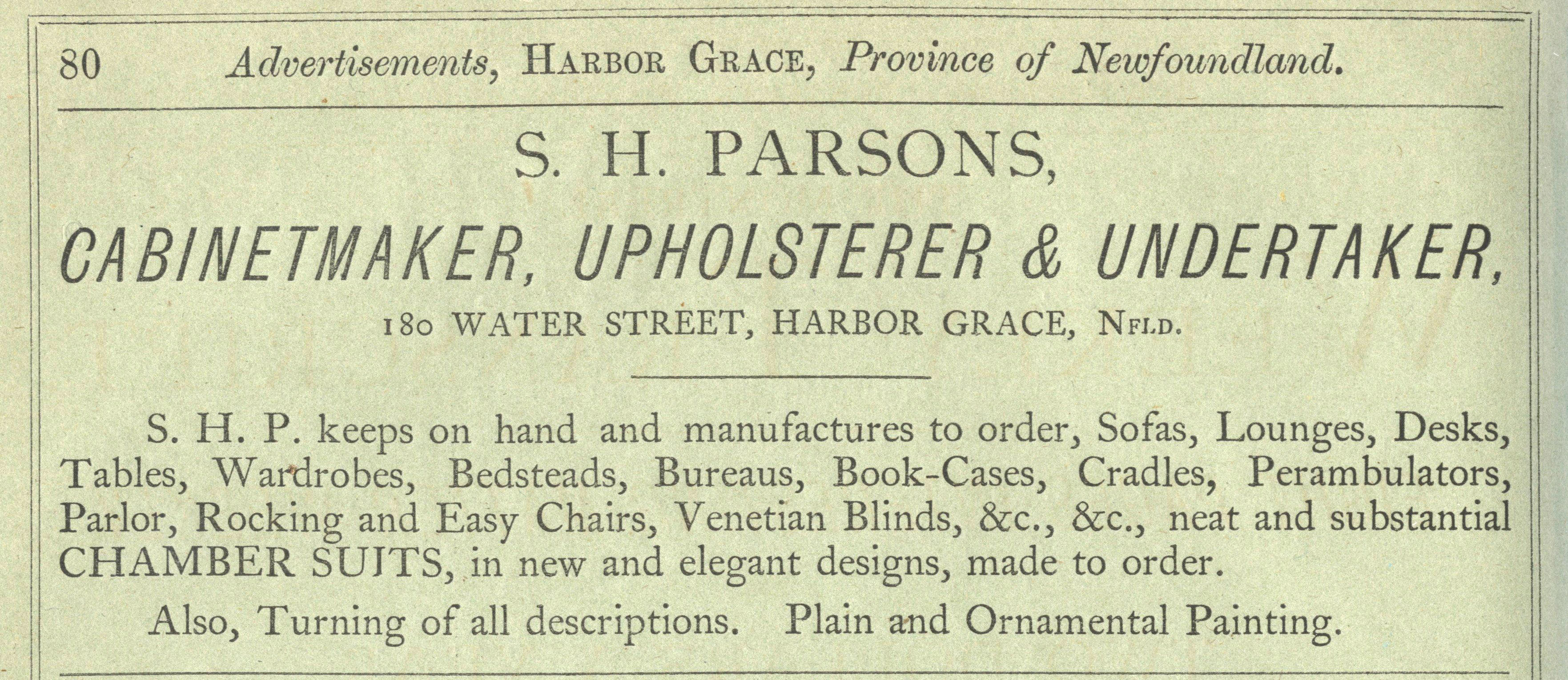
For a time shipbuilding and naval architecture kept him content, however, he soon became interested in the manufacturing of furniture.
As a result, during the 1860s and 1870s, Parsons worked as a cabinetmaker and shipbuilder and at the same time taught himself optics, chemistry and art as they applied to photography. Thankfully, "Another ambrotyper came to the town, an acquaintance followed which speedily ripened into friendship and for the first time Mr. Parsons experienced the joys of focussing and exposure. The ambrotypist knew little of his art but what little he knew he generously shared with his friend and in his gallery our friend learned of cleaning plates, collodion, developers and the uses and abuses of silver nitrate."
By 1871 and still in Harbor Grace while operating his own business as a cabinet-maker and upholsterer, he then entered into a partnership in a photography studio with a man named Mr. Squires. The "chance was offered Mr. Parsons to enter upon portrait photography as a business and he accepted it, paying as was the custom at that time a heavy fee for instruction in the secrets of the trade." Later that year, the partnership ended, and he briefly "went to the little town of Brigus and there laid the foundation of his photographic career." Returning to Harbor Grace, he "entered into a second partnership under the firm name of McKenny & Parsons. "At the end of a year, Mr. McKenny died and Mr Parsons took on the business alone until three months later when the place was destroyed by fire and life had to be begun all over anew." Renting a vacant house, he converted the top floor of his furniture store into a studio and added a basic skylight.
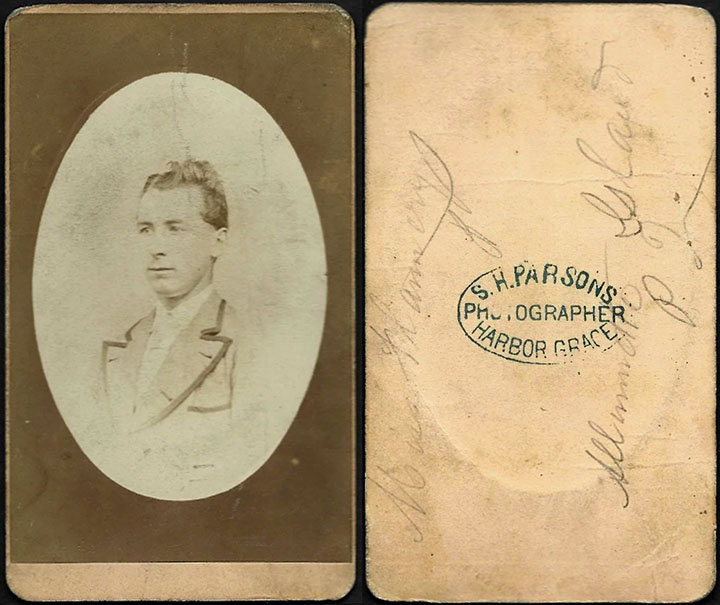 
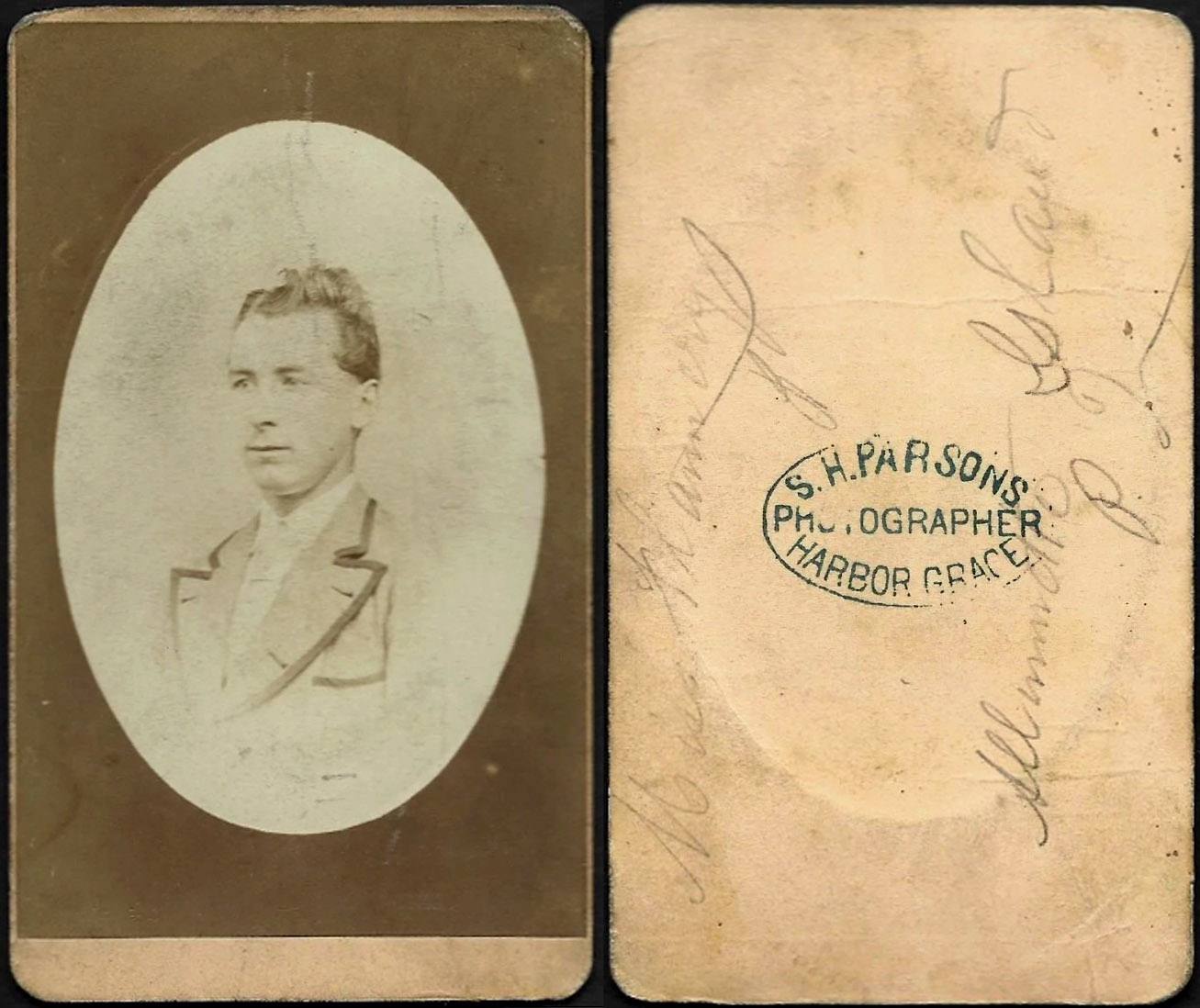
In 1871, Simon set up a portratit studio in Harbor Grace. After one of his early portraits, he mounted the photo on cabinet card and stamped it with S. H. PARSONS PHOTOGRAPHER HARBOR GRACE onto the back. From Ebay listing.
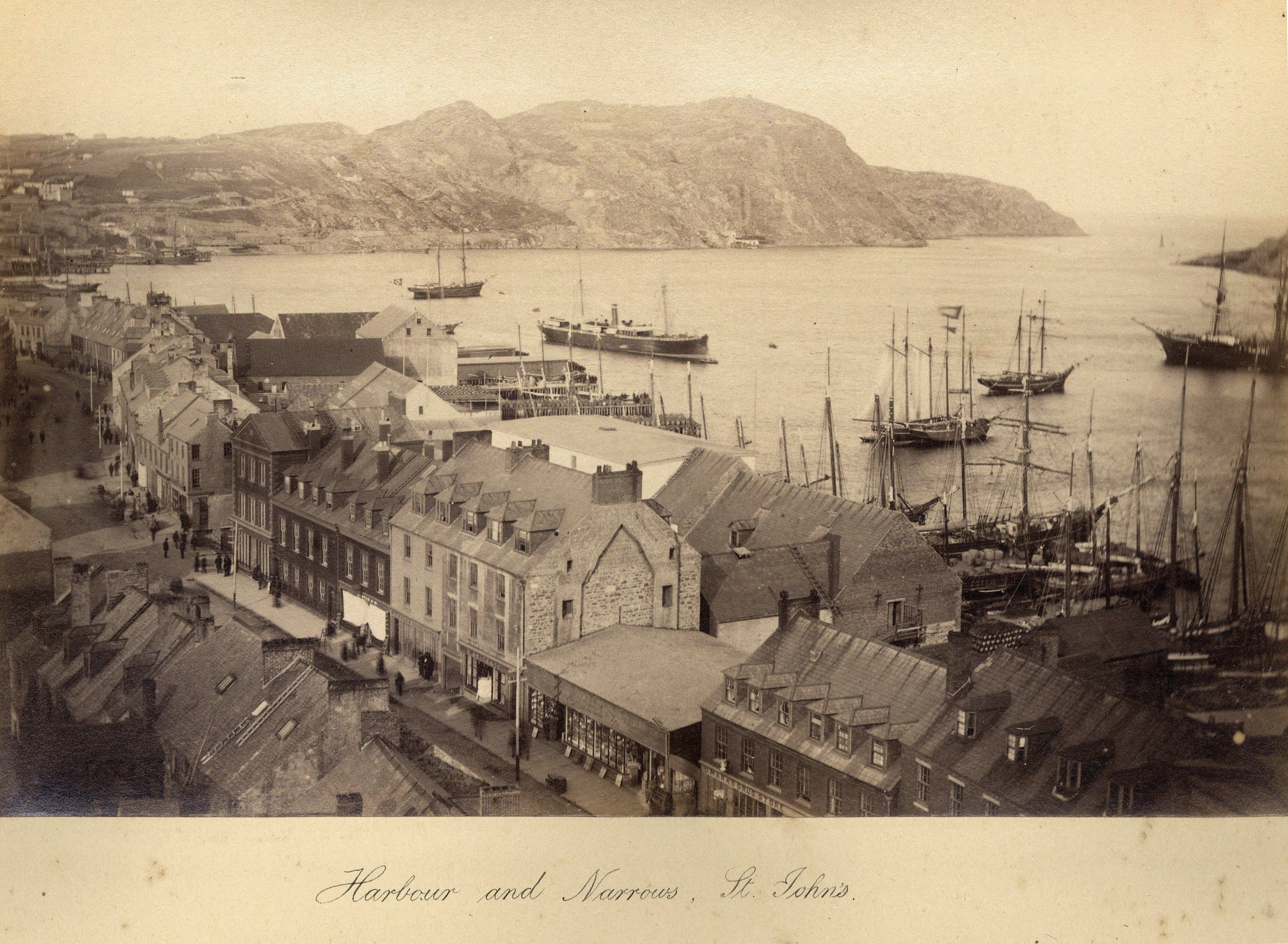
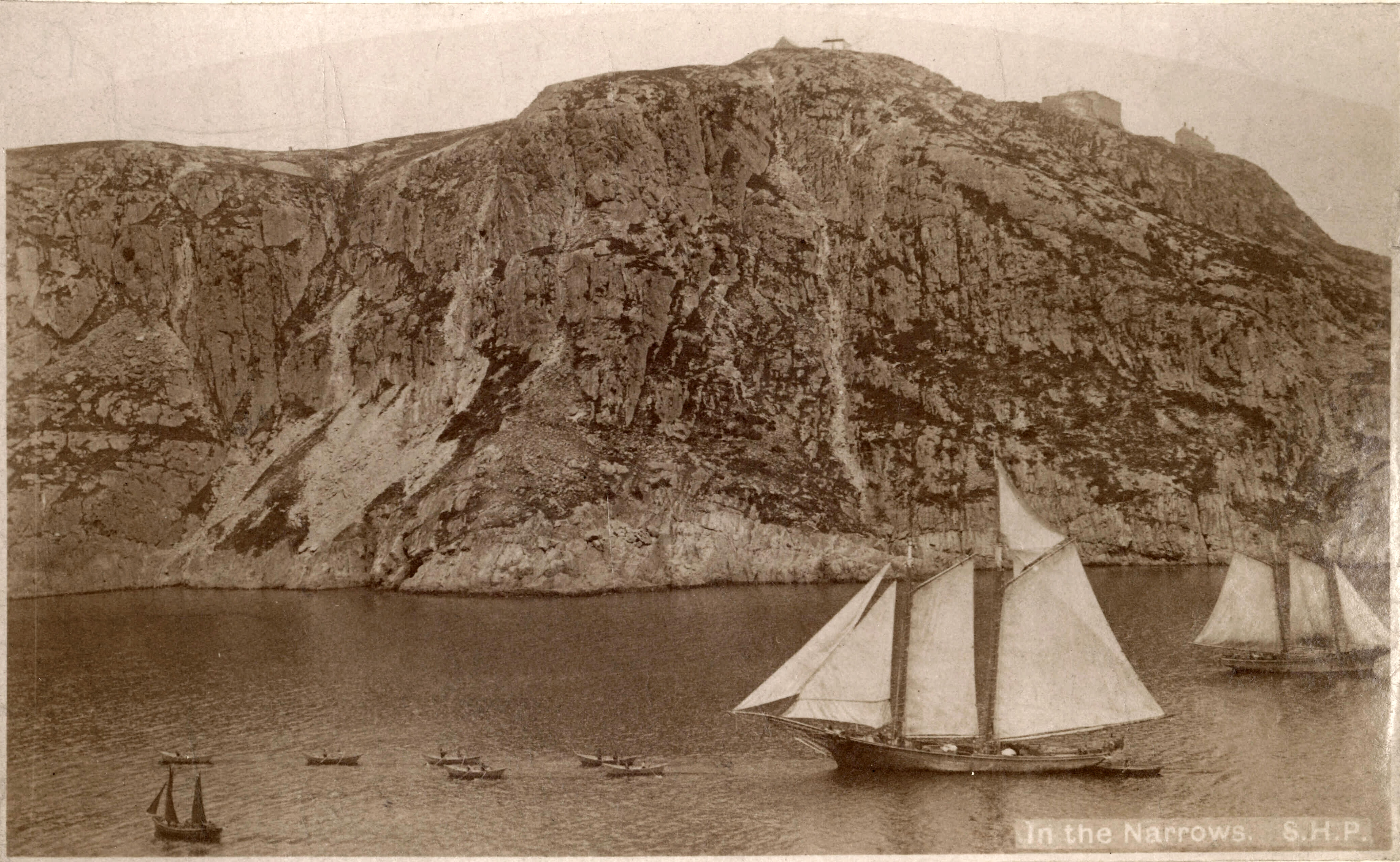
Photographs made by S. H. Parsons in St. Johns, Newfoundland, which were possibly exhibited at the World's Industrial and Cotton Centennial Exposition in New Orleans, 1884-1885. They include views of boats passing through the Narrows (the entrance to St. Johns's harbor), Carbonear Island, Water Street after its first snow, the "Sisters" natural rock formation, and St. Brides College for Young Ladies (also known as Littledale).
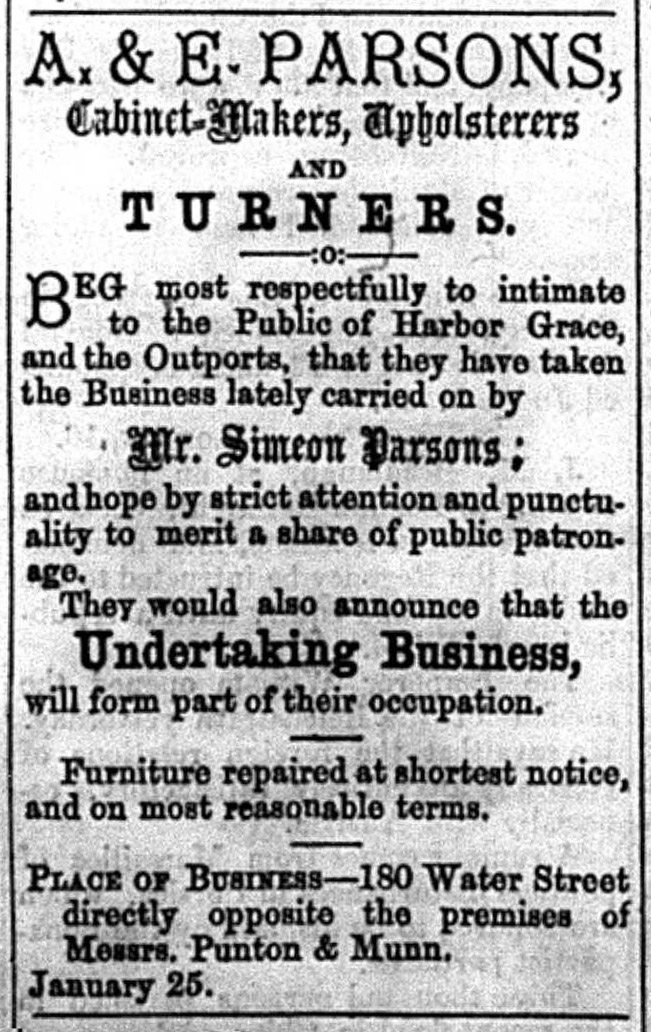
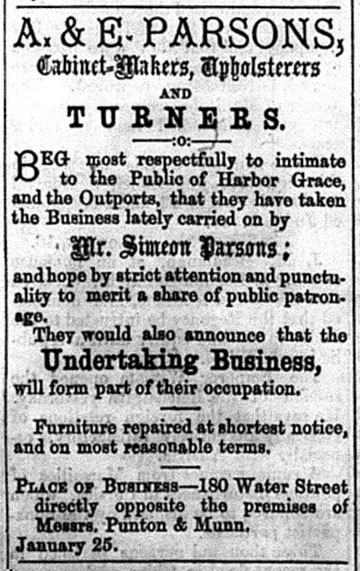
About the same time, Simeon turned over the furniture business to his brothers, Edward and Alexamder with a 1871 advertisement in the Harbor Grace Standard from Memorial University of Newfoundland |
Working now as a full time photographer, he took many portraits of local Harbor Grace residents as well as documented many local outports and landscapes.
Soon after, he moved to a much busier St. John's in November 1872 and partnered with another photographer, Sherburn T. McKenney and was McKenny & Parsons at 206 Water Street. He also spent some time at No. 6 Water Street and made another move to Duckworth Street and finally to 310 Water Street. But before moving from Harbor Grace, Parsons gave his carpentry business to his brothers Edward and Alexander, which became A. & E Parsons Cabinet Makers and Upholsterers.
On April 3, 1875, Parsons was forced out of his studio at 310 Water Street by extensive fire damage. Not to be deterred, a few weeks later by April 20, he had arranged to carry on his business at another location. He even requested his customers contact him with an account of the amounts owed him, since his books had been destroyed. There is no record of the response to this appeal but later advertisements for the studio demanded cash for portraits when delivered.
Still looking to expand his knowledge, in 1876, Parsons took three months off and "left his two sons to keep affairs going and came to America to buy (photographic) stock and get in touch with modern methods and apparatus. Meeting in Boston with Messrs. G.S. Bryant & Co he took a course of instruction in several useful branches of work under their guidance."
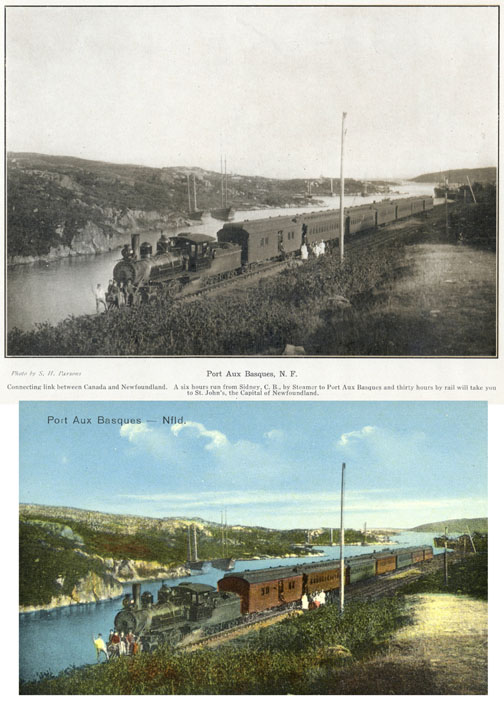
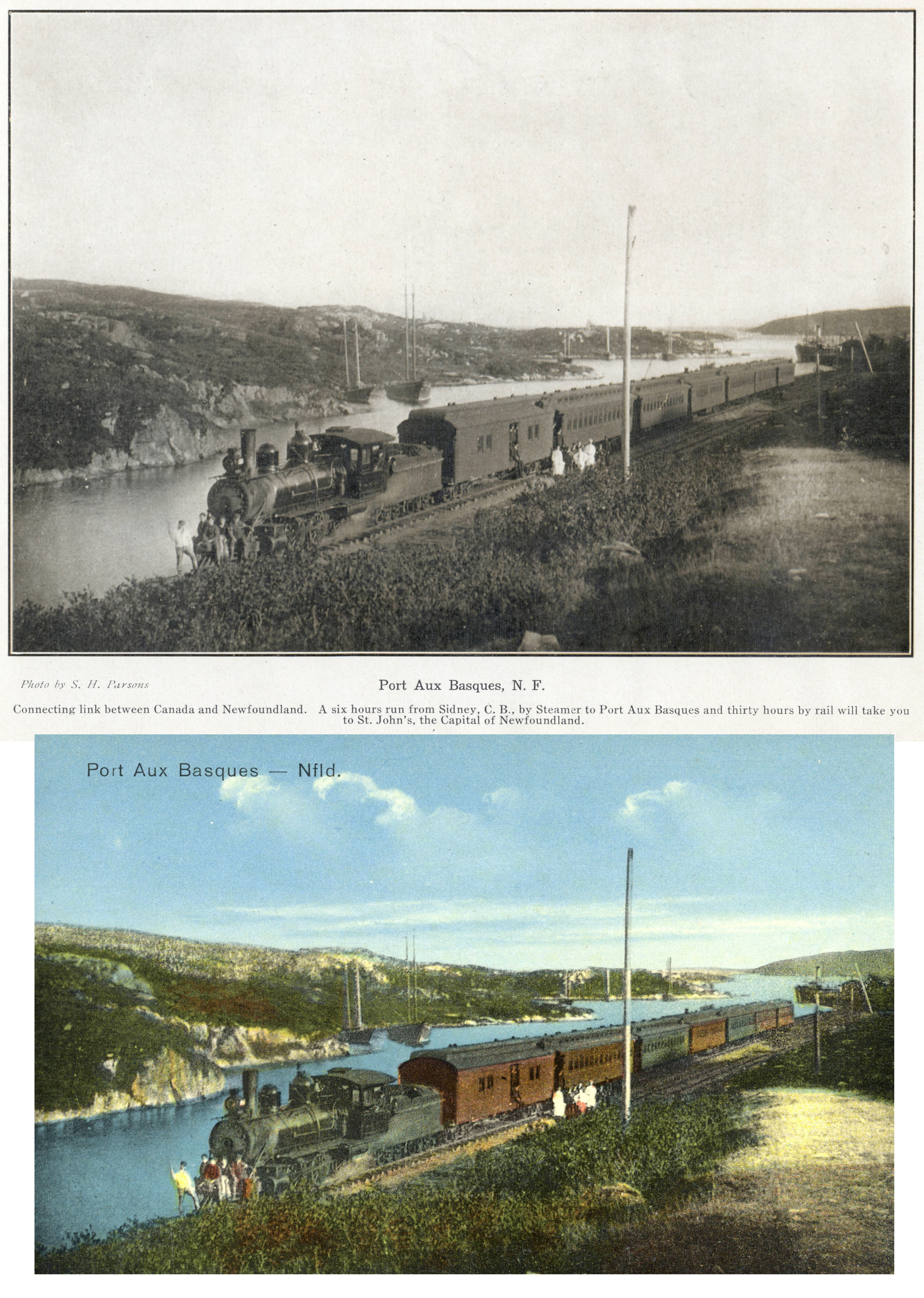
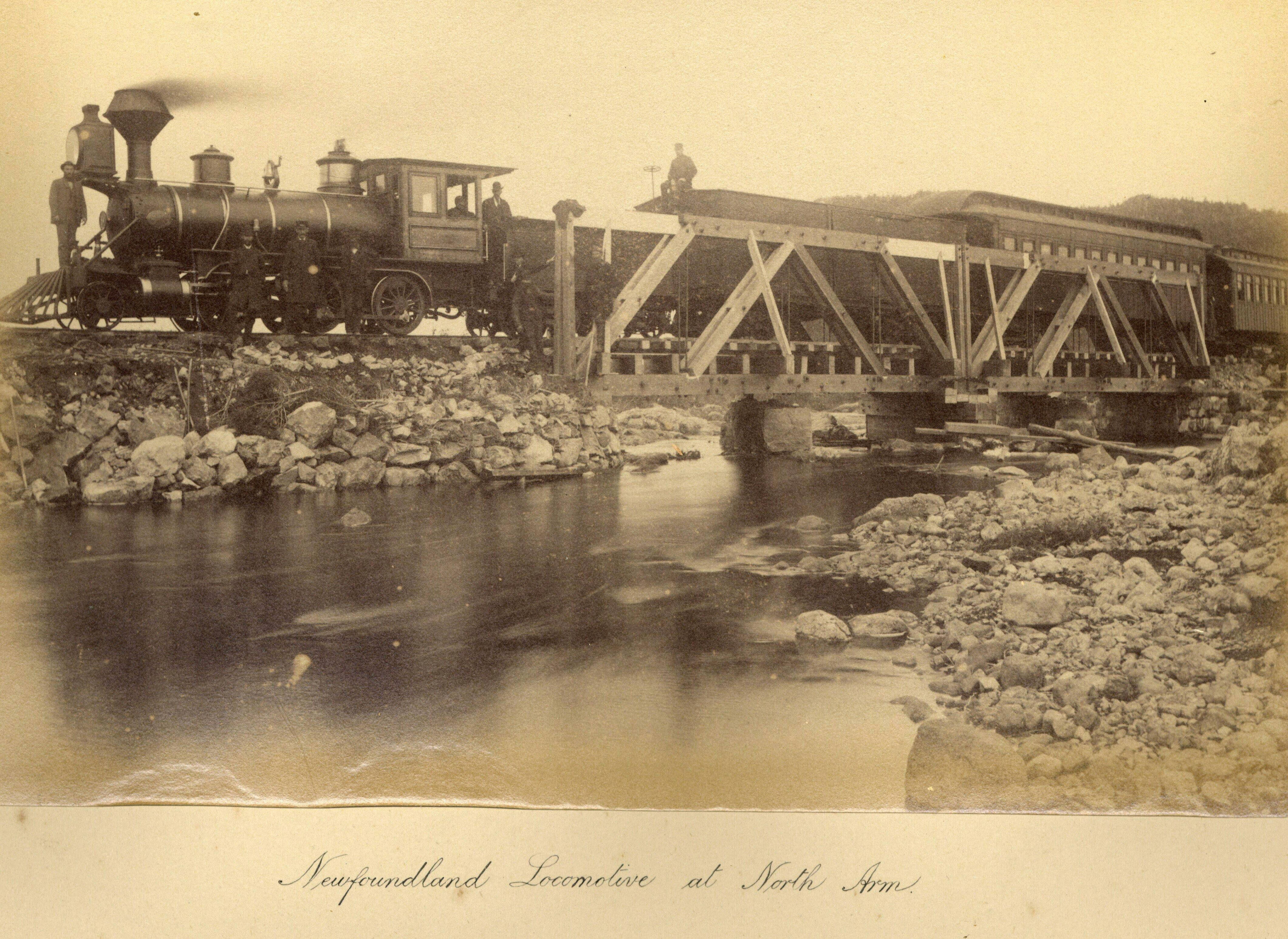
Published in a book, The Ancient Colony and its Many And Varied Attractions and postcard, S. H. Parsons' photo of the the train at Port Aux Basques, Newfoundland. Parsons frequently used and photographed the train and even built a excursion cabin along the railway line known as "Parsons's Shack." Both from Memorial University of Newfoundland
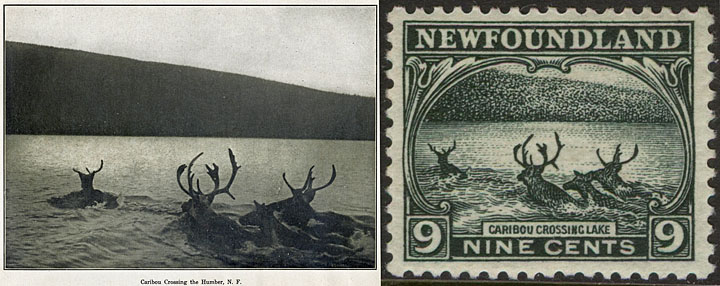
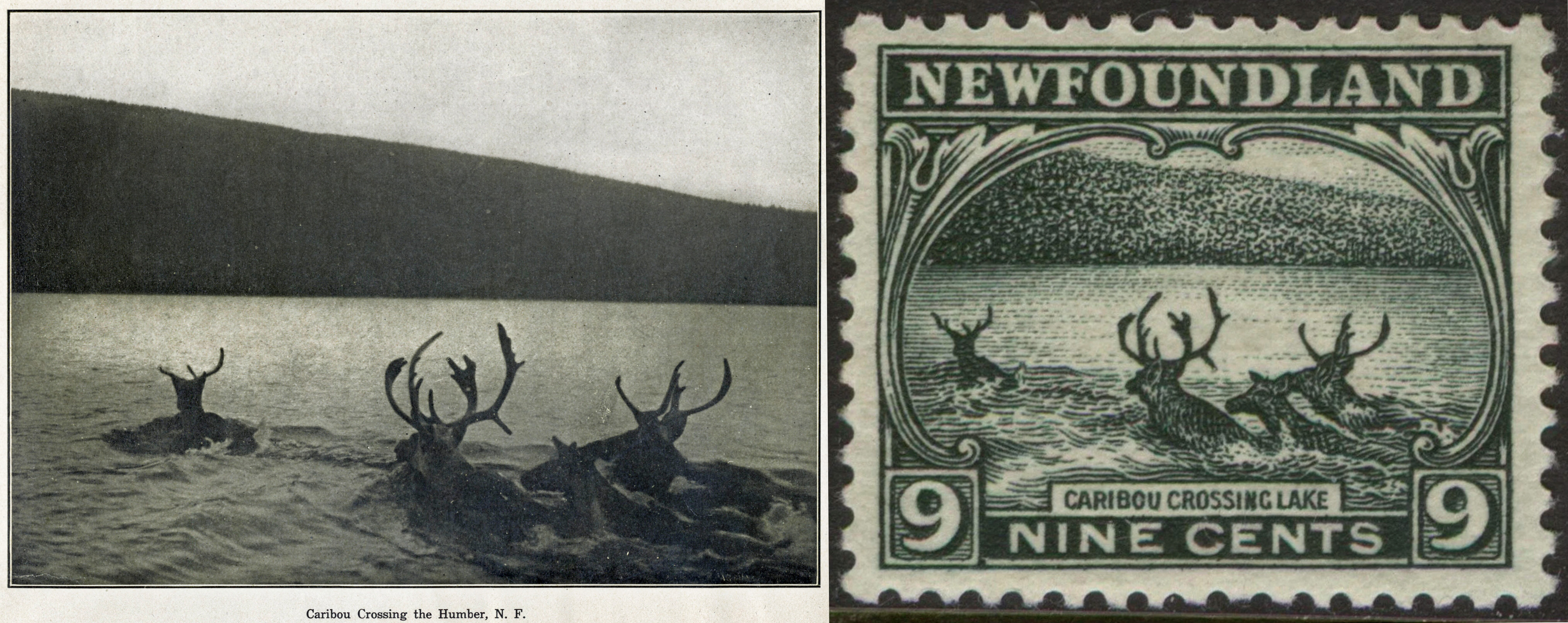
Also Published in The Ancient Colony and its Many And Varied Attractions, Simeon's photo of swimming caribou in the Humber River which was also made into a stamp in 1923. The photo was also published in the 1903 Newfound Quarterly. Photo from Memorial University of Newfoundland and stamp from ebay listing.
|
After travelling to New York, Boston, and Philadelphia and purchasing new new supplies and equipment in the States, local papers reported at this time that Parsons was waiting to receive patents on several developments in the photographic field.
While working at his Photographic Studio and Fine Art Emporium, Parsons traveled extensively throughout Newfoundland and published his photographs. Also an avid sportsman, he enjoyed hunting and trout fishing and was one of a group of people who built an excursion cabin at 2 Mile (later 9 Mile) post of the Placentia Railway Line which was popularly known as "Parsons's Shack".
Parsons' photographs were used to illustrate books, magazines (including the London Illustrated News), postcards, and stamps. He even published several books of photographic views, and a large number of his pictures appeared in the Christmas magazine (PDF) issues of local papers, such as the Evening Telegram.
Having been so frustrated early on by the lack of support for the art of photography, Simeon was
"Unafraid to share and teach the trade, Parsons took on new photographers such as James Vey (1852?-1922). Prolific with his camera, Vey’s images appeared in family homes, in newspapers and magazines. One of the first St. John's photographers to adopt the camera flash lighting, Vey's impressive client list included Guglielmo Marconi."
Parsons was a prolific, straight forward photographer and many examples of his art survive. He made valuable contacts while in the United States and over the years he received much praise from American publications. For example, the Philadelphia Photographer, in its issue of February 1887, stated that he was one of the foremost advocates of the art of photography and its use for illustrations in the print media. He exhibited his work in Europe and was recognized at the international exhibition in Barcelona in 1888 with a silver medal and a diploma of merit.
During an expecially memorable event that took place in St. John on July 8, 1892, ironically, not one photographer was in town, not even Parsons who was travelling around various outports at the time. The great fire, which started that afternoon roared through the city destroying a large area of St John's. "The fire had destroyed almost all of St. John’s, leaving 11,000 people homeless and causing $13 million in property damage." However, not one photograph of the conflagration consuming the city exists. What has survived, are the aftermath images of the fire taken by a number of photographers including Parsons, who rushed back to a smoldering and ruined St John's immediately after he learned of the disaster.
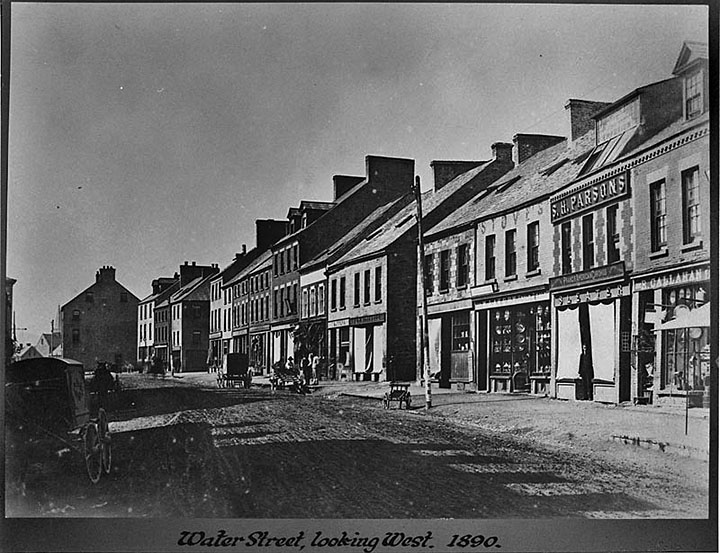
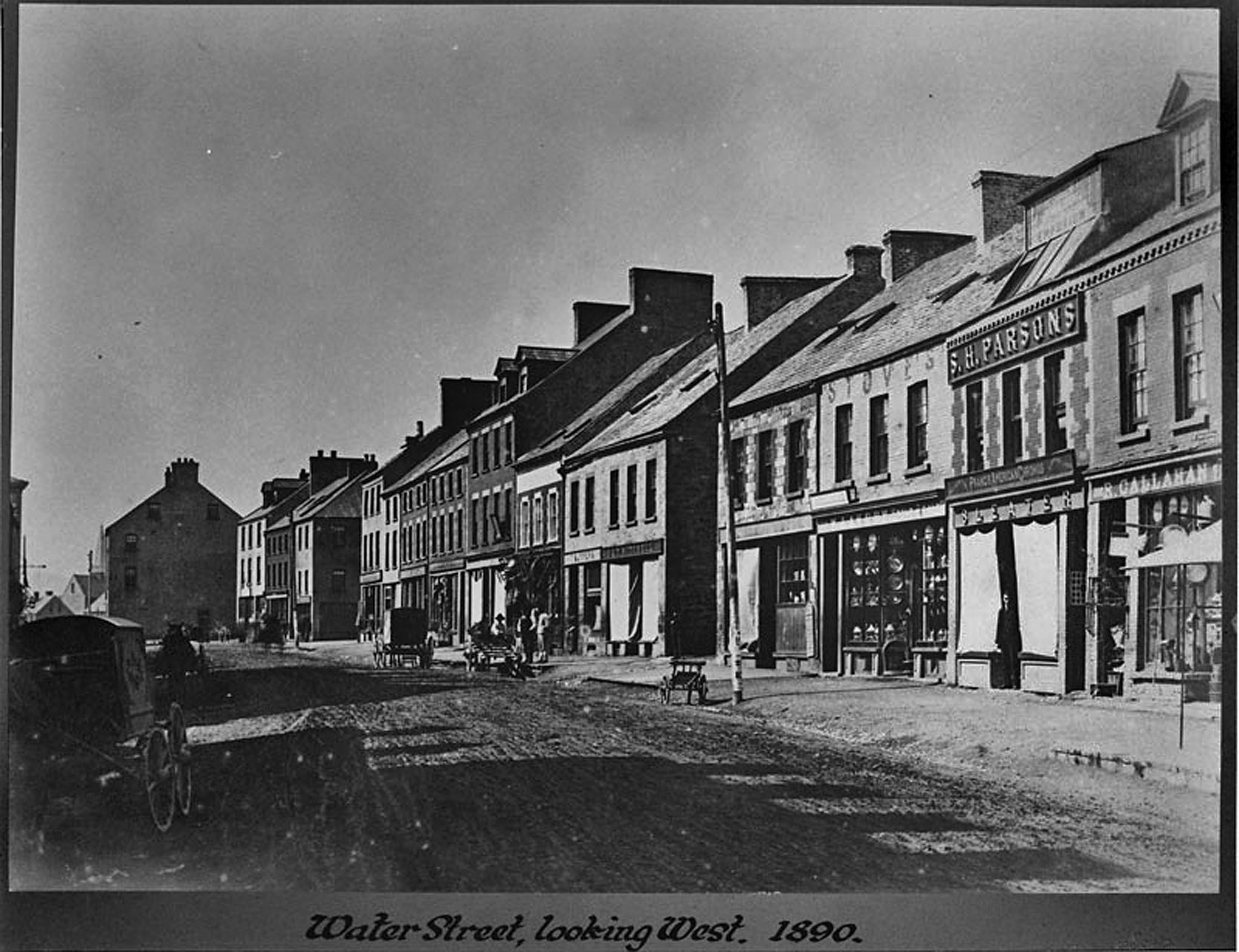
S. H. Parsons' studio in 1890 along a dirt Water Street in St. John's filled with carriage tracks and carriages. The address is likely his 310 Water Street location. All the lined up shops look like the streets on London. Notice the angled windows along the top of his building to let in additional light for portraits. From The Rooms Collection |
Sometime between 1894 and 1898, Simeon moved into a newly constructed building at the corner of Prescott Street and Water Street where the family relied on portraiture as the basis of their business. The family lived on the premises except for William who was probably married by then. William was the first son to follow in his father's footsteps and become a professional photographer. He had established his own photographic business in his father's former premises at 310 Water Street. William eventually moved to England where he continued working as a photographer. S.H. Parsons' other son, Charles, also worked in the family business.
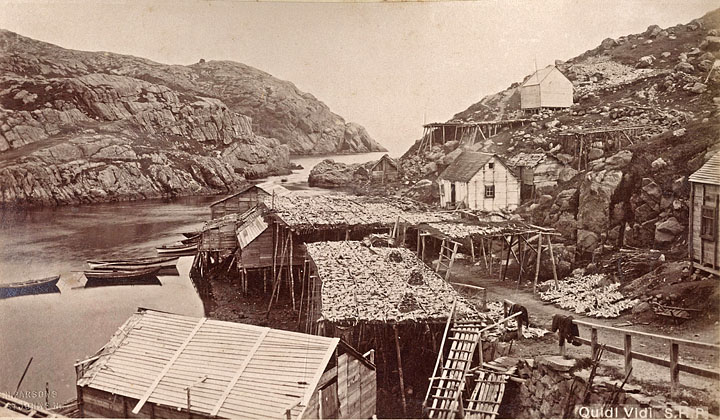
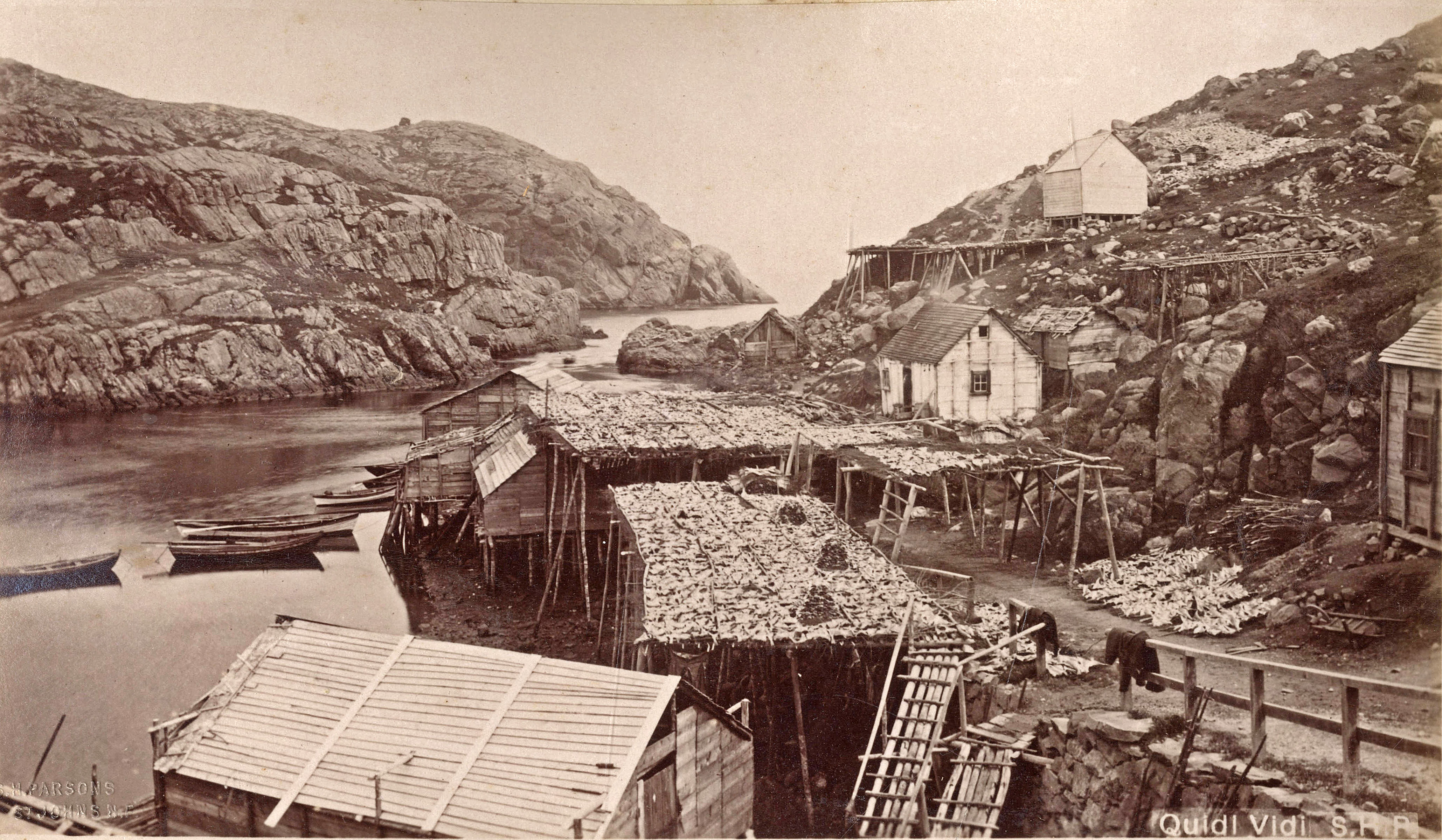
The small, rocky fishing village near St. John's where fish were dried on raised stages and flakes. The entrance is a narrow protected, passage which protects the boats and homes from storms. However, it also provided a surprise overland access for the French military to invade and burn St. John's in 1697. From Memorial University of Newfoundland. |
Unfortunately, after feeling sick in 1907, Simeon was forced to visit Montreal for treatment of stomach cancer. Nothing could be done to check the metastasis of the disease and on March 1, 1908 he passed away. According to contemporary reports, there were a large number of mourners at the funeral including members of the Cochrane Street Methodist Church choir, of which Parsons had been a member. But the photography and his sons persisted and by 1908, George too had joined his father's business and the name of the company was updated to S.H. Parsons and Sons which continued under the direction of his sons.
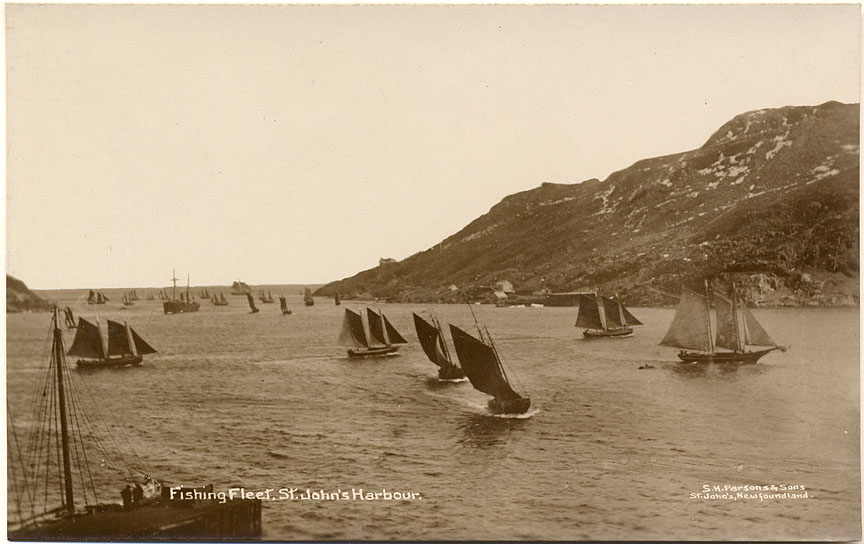
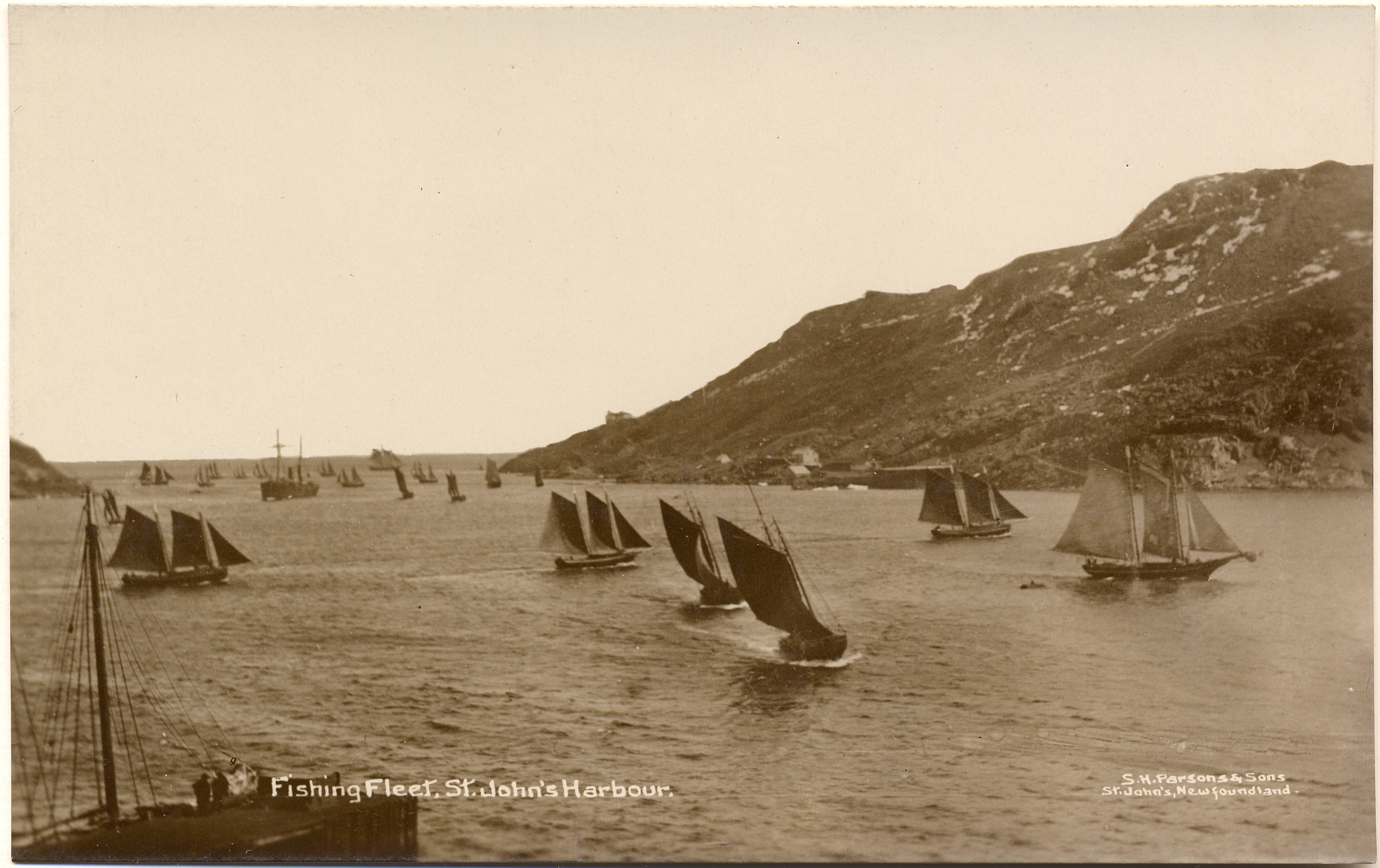
Photo post card cretited to S. H. Parsons and Sons of the fishing schooners in St. John's harbor heading out the Narrows. From Parsons Collection |
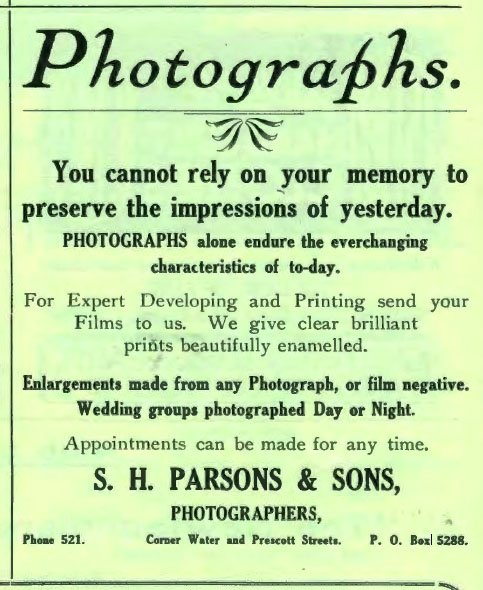 An ad for S. H Parsons & Sons in the October, 1936 Newfoundland Quarterly promotes a shift in business to consumer film processing, printing as well as enlargements business. From Memorial University of Newfoundland.
|
"Parsons' children carried on the business of S.H. Parsons and Sons until 1933. His nephew, Rubin T. Parsons, had taken over the carpentry operations in Harbour Grace, but he, too, craved to be behind the camera. Rubin Parsons made his photographic stamp on history by documenting early transatlantic flight."
Simeon's sons continued in the photography business including
William Parsons, who likely had returned from England and in 1924 and Charles Parsons, who was again working as a photographer in St. John's. Photographs by him were credited to J.C. Parsons. By 1928 William had become the sole proprietor of the family business. He was the only Parsons listed as a photographer in St. John's in the City Directory.
However, the business model had shifted a bit as the spread of simple and inexpensive Kodak cameras, like the point and shoot Brownie and roll film became more accessible. Professional photographers were not as necessary as amatuear photographers took their own scenic and family photos. Now, film processing as well as prints and enlargements were promoted in a 1936 S. H. Parsons and Sons advertisemet in the Newfoundland Quartely magazine. Also, another new invention for Newfoundland, a phone number was added to the usual Water Street addess on the bottom of the ad.
Sometime after this, a Parsons Studio was established in Corner Brook, perhaps by J.C. Parsons. It was eventually taken over by Marshall Studios. S.H. Parsons and Sons continued in St. John's until the 1950s.
It is not known what happened to all the glass plates and negatives, however many prints remain throughout the island and in multiple institutional collections (Memorial University of NFLD, The Rooms Collection and University of Cambridge in the United Kingdom to name a few).
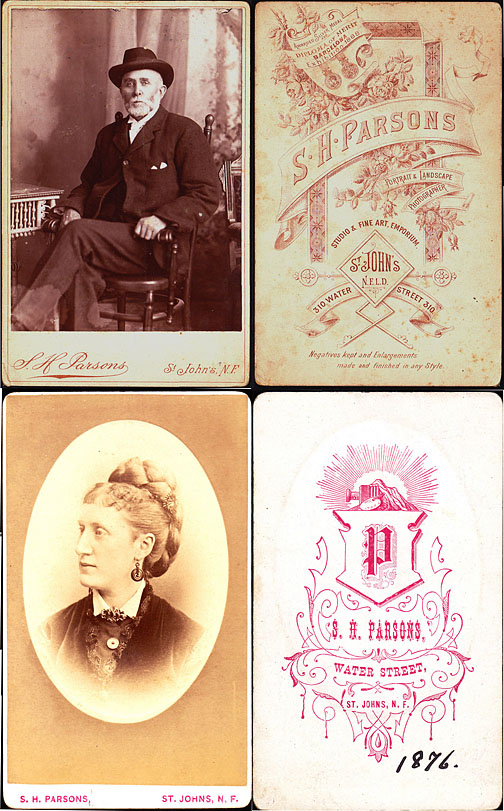
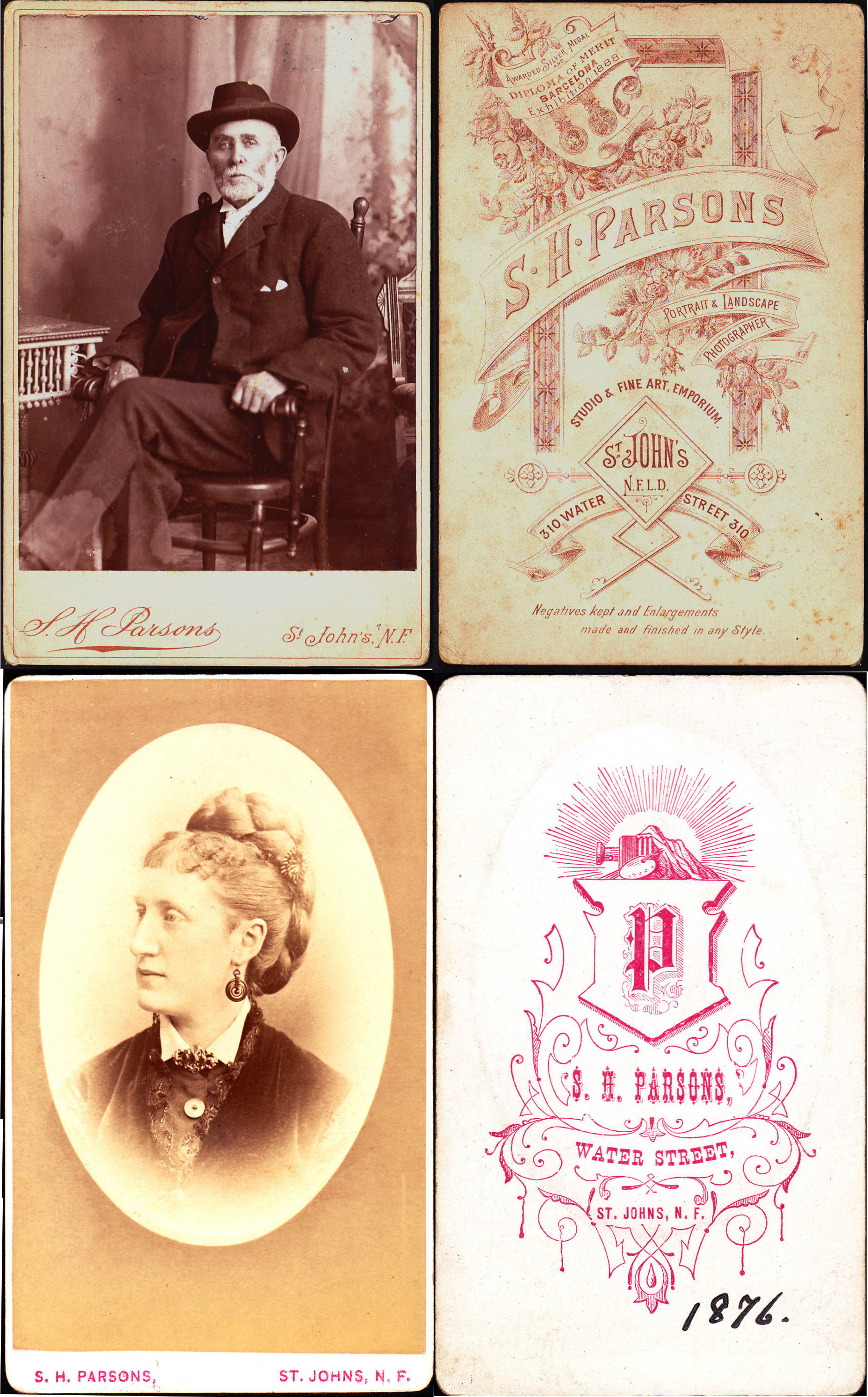
More S. H Parsons cabinet card portraits from the studio at the 310 Water Street location. The woman photographed has 1876 inscribed on the back of the card in pen an ink. Notice the promotion of his Silver Medal and 1888 Diploma of Merit from the Barcelona Exhibition on the top card. From Ebay listings. |
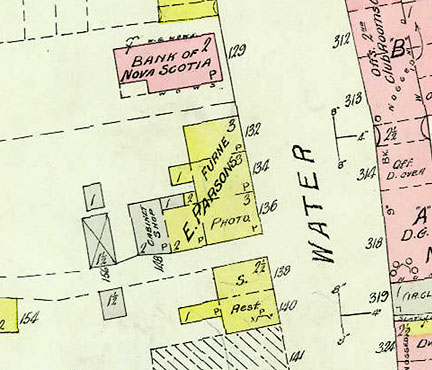

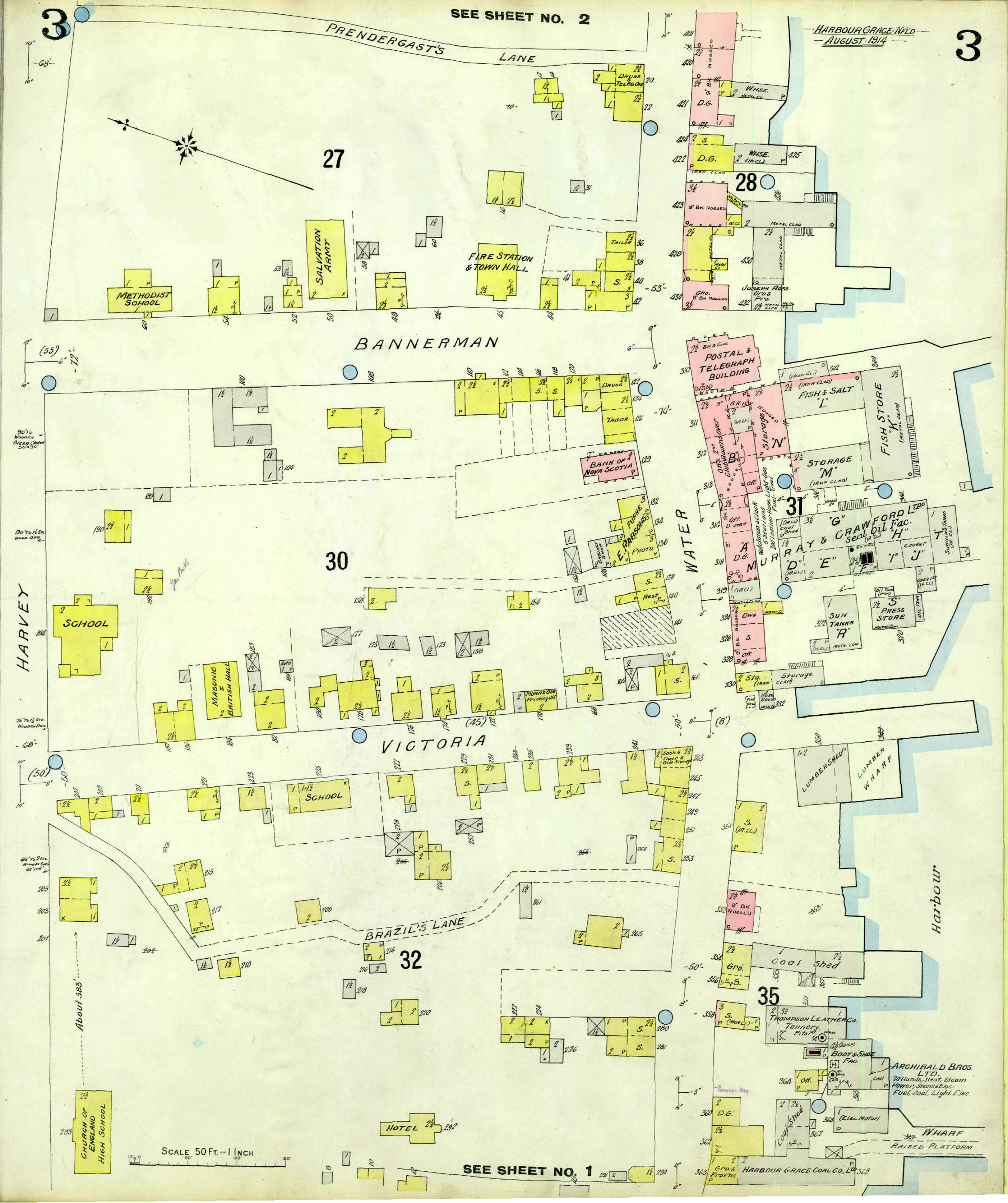
Fire Map of Harbor Grace showing the Parsons shops along Water Street. From Memoial University of Newfoundland. |
Back in Harbor Grace at Simeon's Shops:
In an unique account, author Walter Peddle takes up the story of Simeon's brothers Alexander and Edward while they worked in the furniture and even undertaking business.
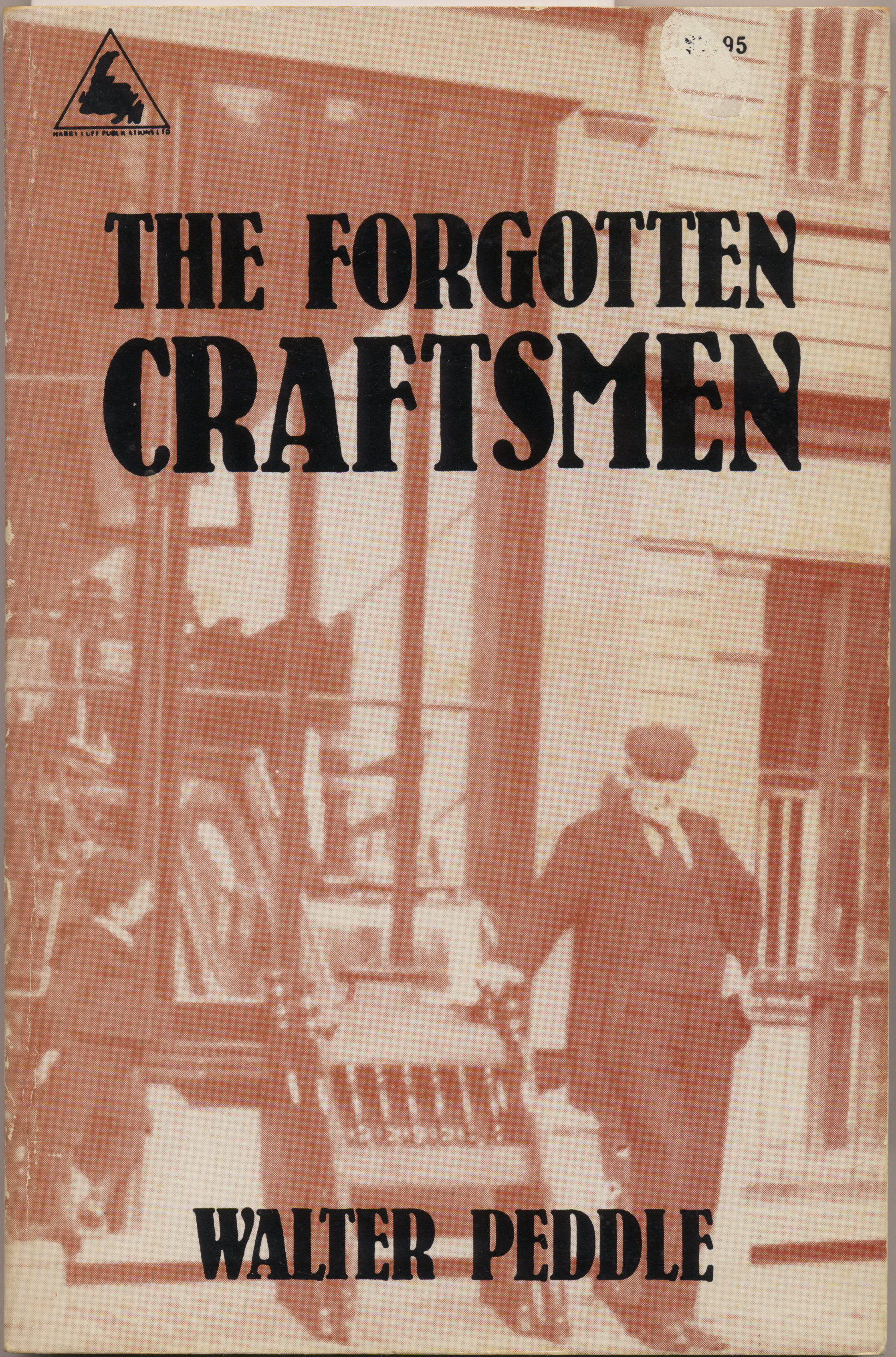
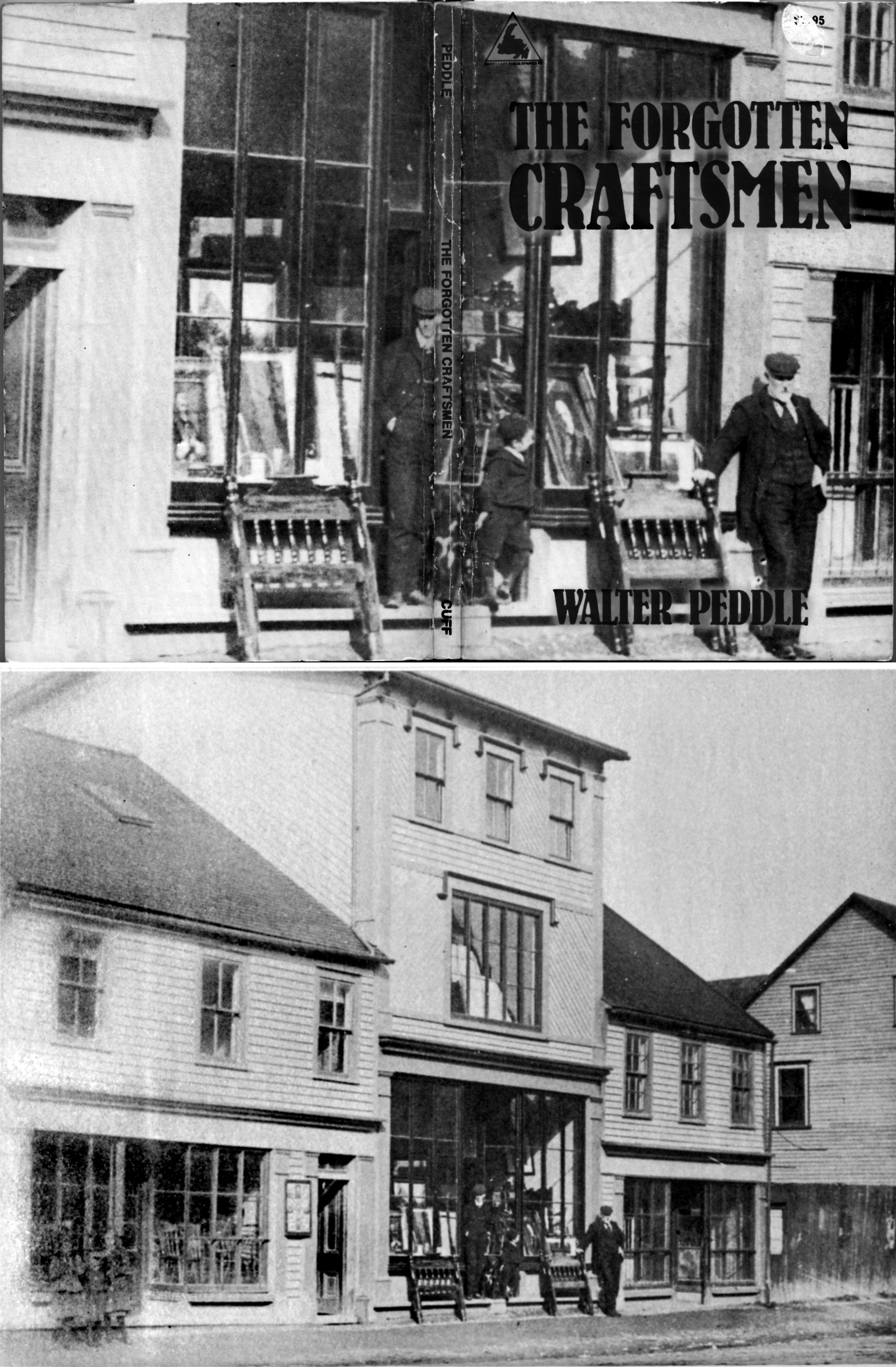
Exerpt from Walter Peddle's book, The Forgotten Craftsmen:
Furniture making in Harbour Grace
Due largely to successful fisheries and the industrious nature of the local merchants, Harbour Grace, Conception Bay was the most rapidly developing community after St. John's during the 19th century. Sources of information about Harbour Grace furniture makers are few. We know that John Searle was one of the first cabinet makers to set up a shop because he advertised his trade in the Newfoundland Mercantile Journal, January 1817. Period books, old newspapers, directories, census reports and voter's lists, however, offer little insight into furniture making in that town. It was possible, nevertheless, to put together an account of three furniture making businesses that operated in Harbour Grace during the late 19th and early 20th centuries. Two had their beginnings around 1870-- a time when the town's prosperity had peaked and began slowly to decline. One was run by Alexander and Edward Parsons; the other by Francis Cody. It was probably at least a decade later that Albert Rogers began making furniture.
The Parsons family
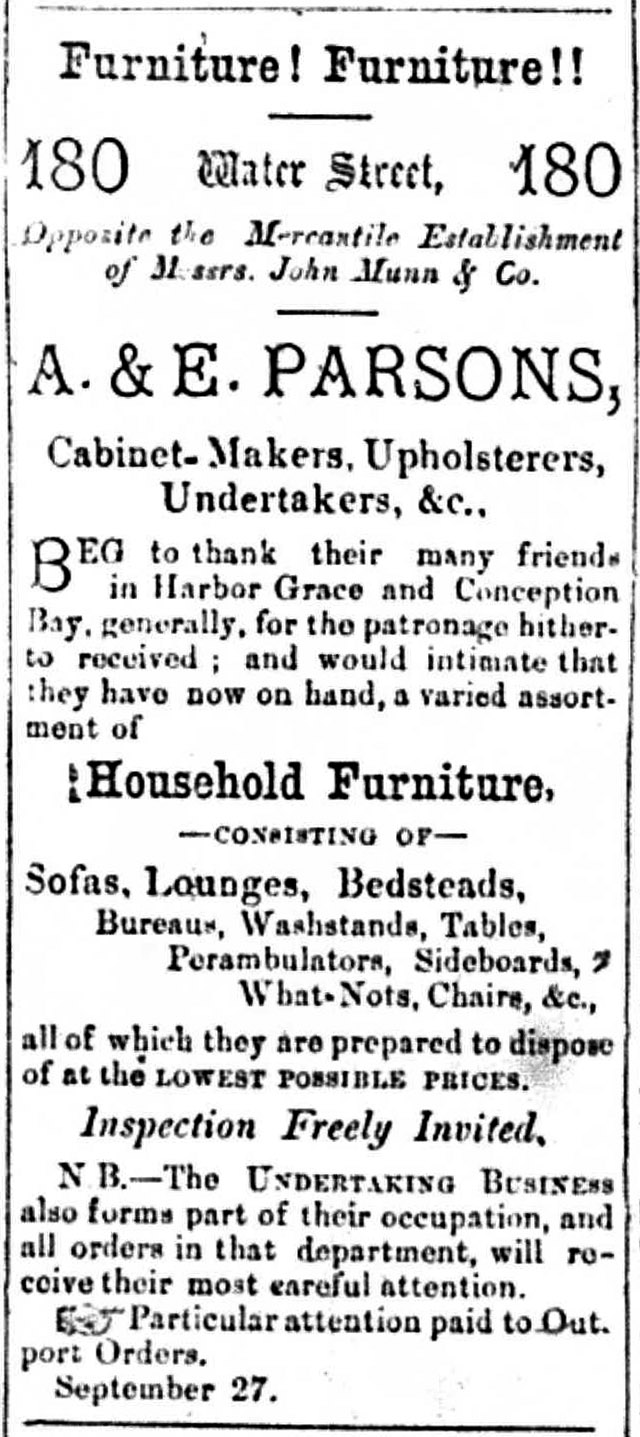
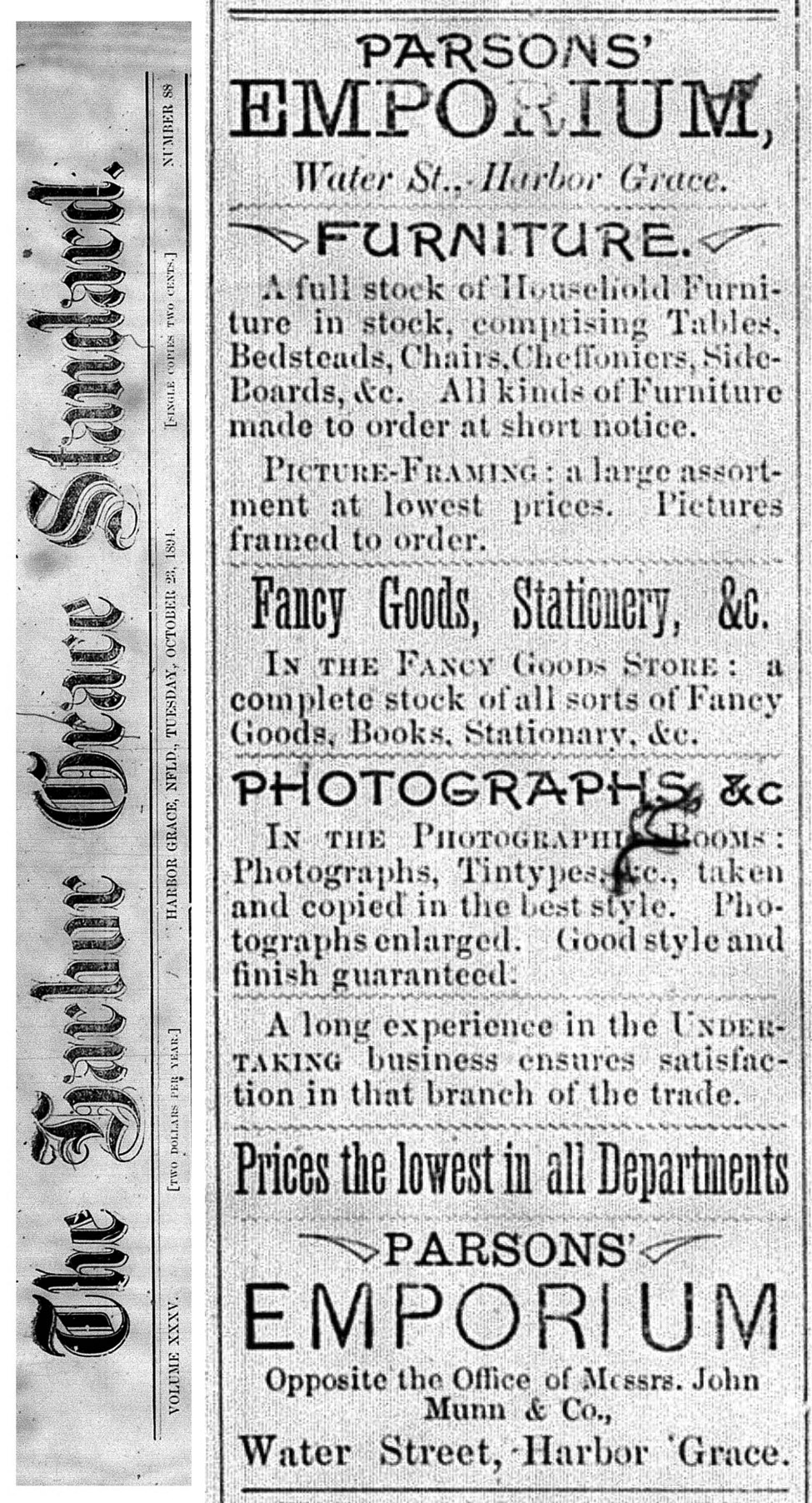
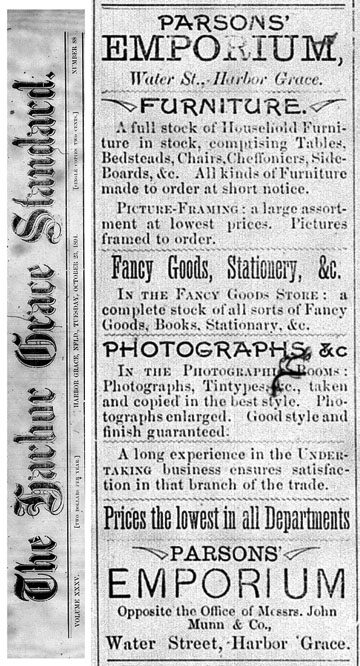
Of the three, Parsons probably produced the largest amount of furniture. This business, which started as a cabinet making, upholstery and undertaking enterprise, gradually expanded to include a retail fancy goods and stationery store and a photographic room. The two following advertisements show this expansion. The first appeared in The Conception Bay Advertiser, Harbour Grace, Newfoundland, December 27, 1873. At the time, Alexander was 26 years old and Edward,
21.
Edward Parsons was an ambitious man. After his brother's death, he managed this thriving business himself until 1927, just two years before his own death. He was also politically active and in his later life was elected as a member of the House of Assembly for the district of Harbour Grace in 1909 and again in 1913.
In 1927 Edward's son Reuben assumed responsibility for the business. By that time, an electric lathe and a multi-purpose machine that could plane, cross-cut, rip and cut grooves were being used and beds were one of the most popular sellers.
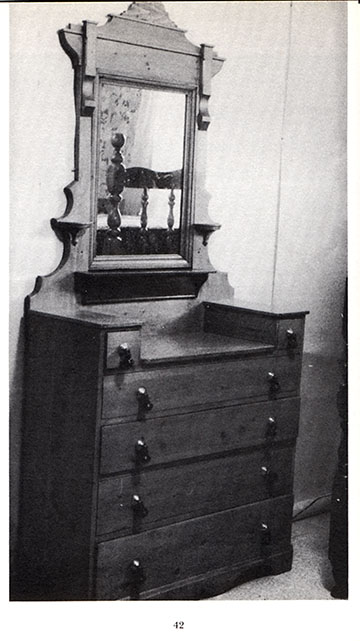
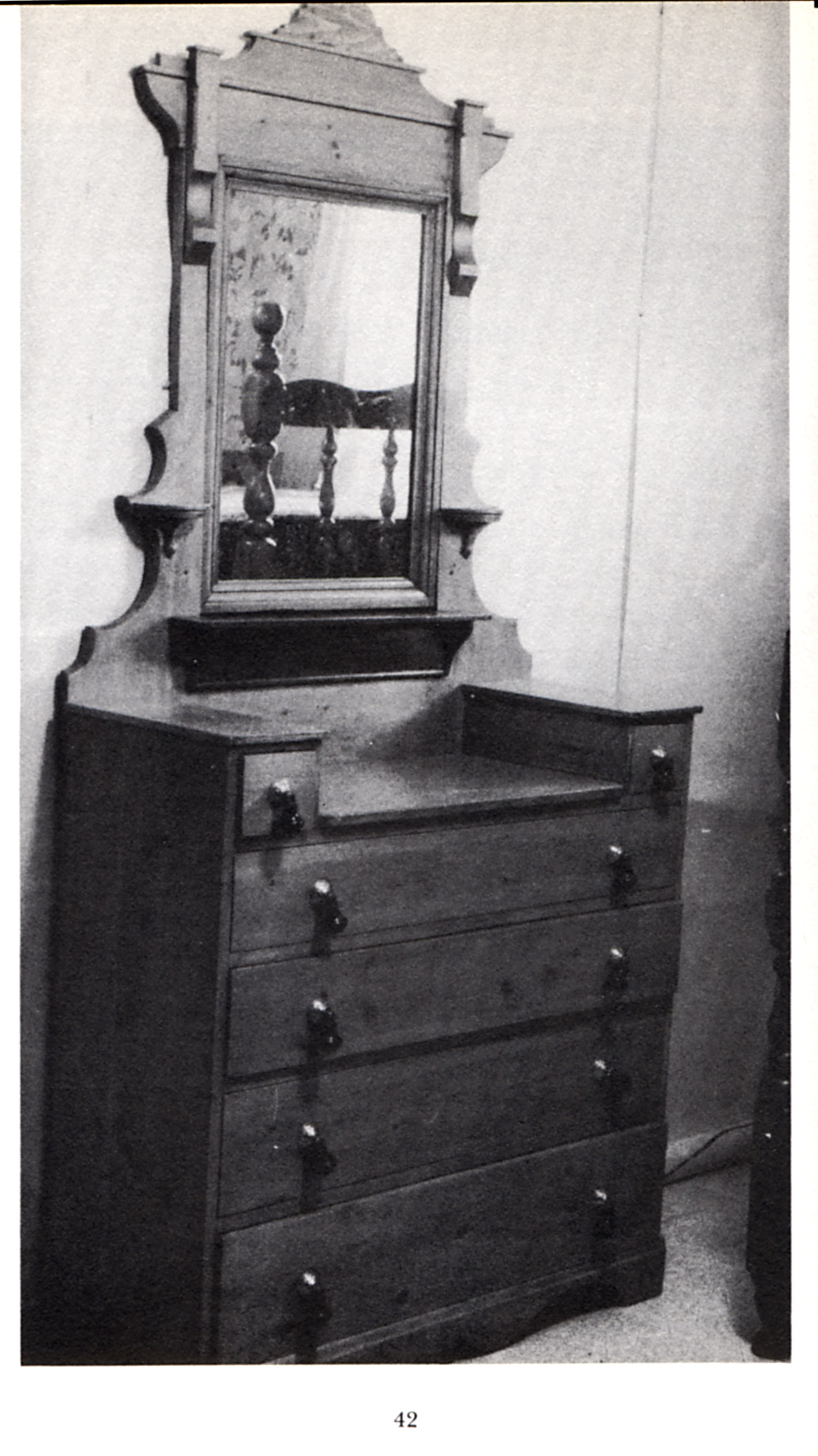
A pine chest of drawers attributed to Parsons' shop dating to about 1900. The frame is held together by mortice and tenon joints. P.42 The Forgotten Craftsmen |
The skippers of fishing vessels from Trinity Bay and Bonavista Bay would come in the fall of the year at the end of the fishing season and whisk the beds away before their varnish finish had completely dried.
Reuben's son, Maxwell Parsons, has vivid memories of these schooner masters struggling towards their vessels with the dismantled beds precariously balanced over their bowed shoulders. "You couldn't make them up quick enough", he commented.
In addition to a general line of household furniture, mattresses were also manufactured, and stuffed with sea grass gathered in Clarke's Beach, Conception Bay, or with excelsior imported in bales.
Metal springs were imported for the mattresses and for the sofas and couches the shop produced. Chairs were imported in an unassembled condition from the Dominion Chair Company, Bass River, Nova Scotia, and assembled in the shop for re-sale. Only about three people worked in the workshop. James Fox, who was a cabinet maker and undertaker, himself, was an employee at one time.
The furniture making ceased after 1949 due to increased competition from mainland Canadian factories. Maxwell Parsons explained:
"With the dropping off of tariffs after Confederation; it was cheaper to import and sell."
It is regrettable that no ledgers or other business or personal records have survived, and tragic that to date only a single piece of furniture can be definitely attributed to the 19th century shop of Alexander and Edward Parsons. Unfortunately, such furniture was considered of little value because it was made from so-called common woods such as locally grown pine and birch; consequently, most of this furniture was eventually discarded.
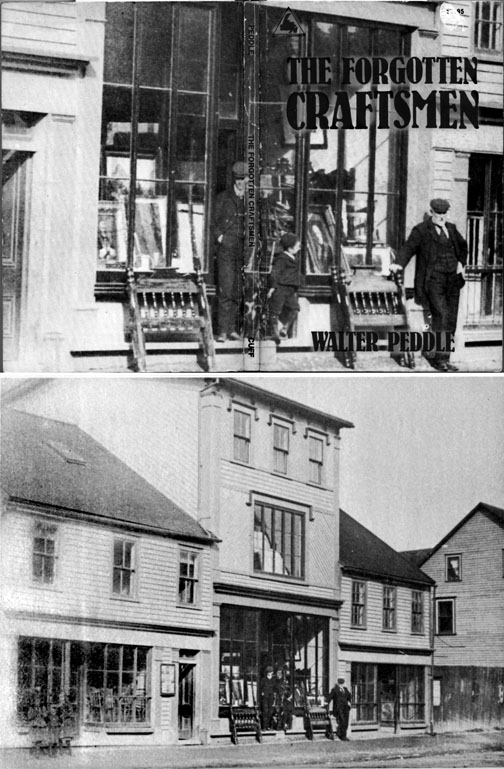 
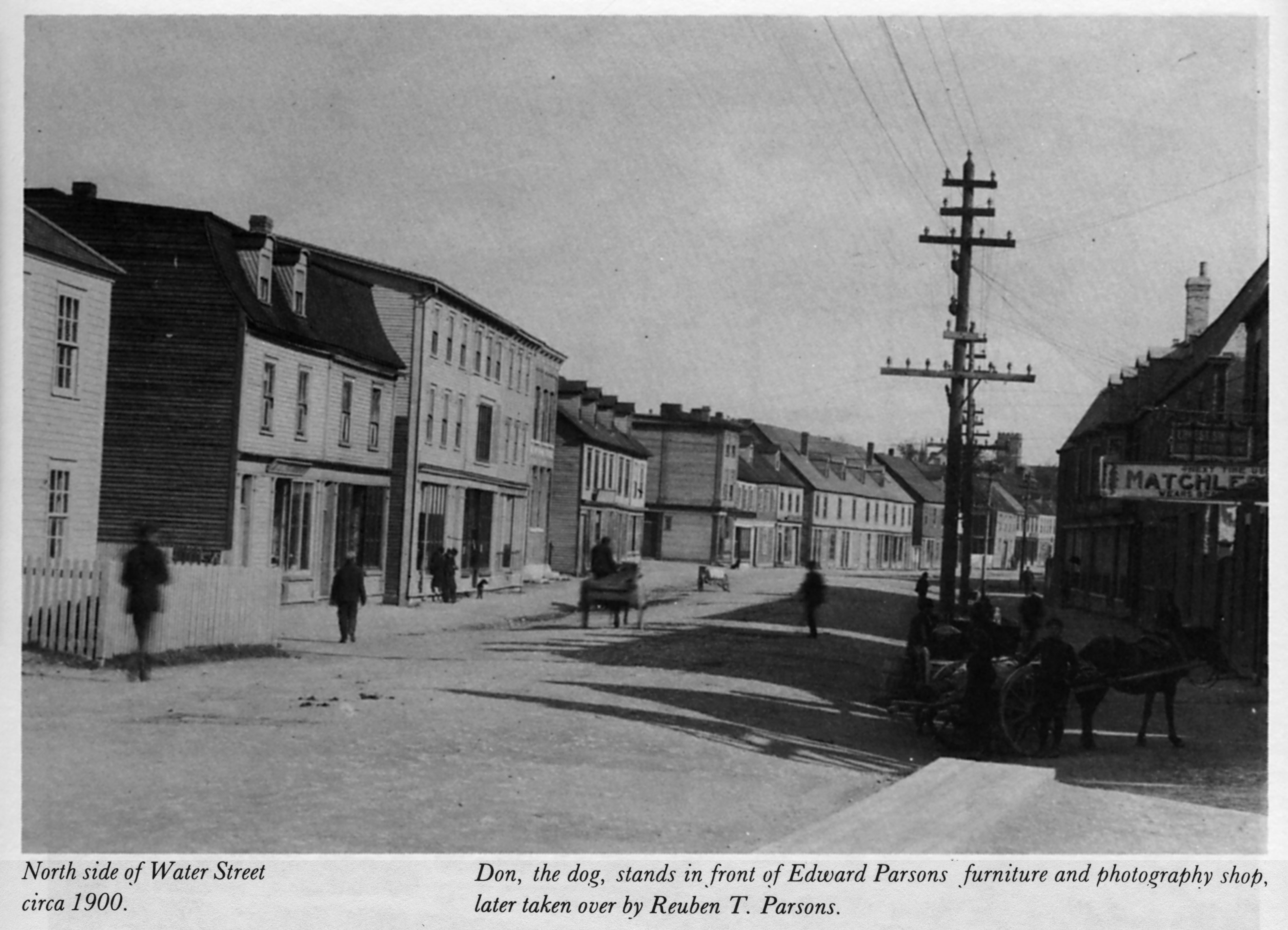
Three buildings comprising Parsons' Emporium, about 1900. The photographer was likely Simeon. In the doorway is Reuben Parsons; the other gentleman is believed to be Edward Parsons. The first two floors of the center building were used to display furniture, the third floor, for storage. In the building on the left, stationery, fancy goods and some furniture were displayed on the ground floor. Behind the display area was the workshop. On the second floor was the photographic room. Just to the right of the centre building is a shop rented by the Parsons for coffin storage. Coffins were also kept in a shed (referred to as the coffin house) behind the building at the extreme left. Photos from The Forgotten Craftsmen - Parsons Collection
October 23, 1894 Ad - From Memorial University of Newfoundland. |
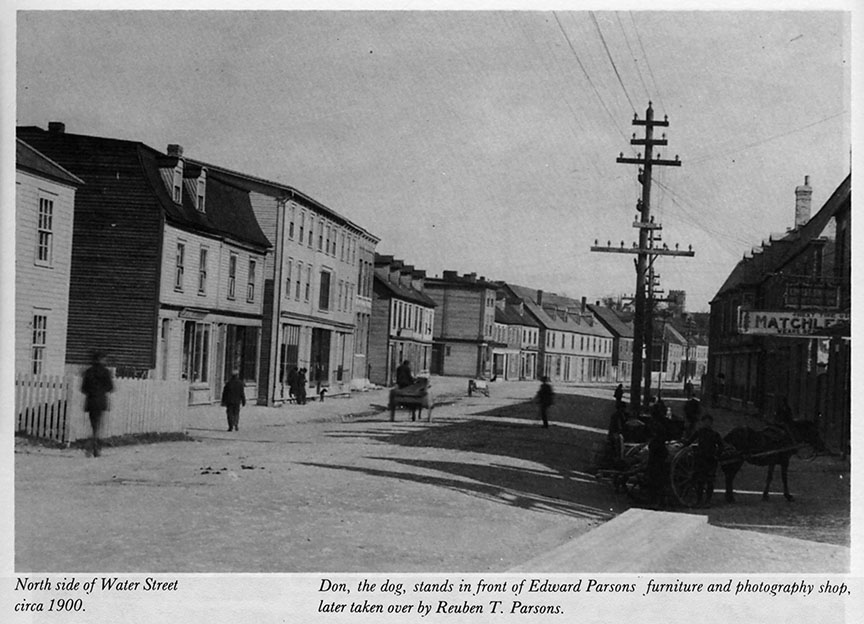
Reuben Taylor Parsons photo in Harbor Grace of the family furniture and photography shop on the left, pictured with three story additions about 1900. The three buildings would also survive a 1944 fire and stood until the 1990s, only to be almost entirely demolished with only one building remaining today (18 MB PDF - Heritage NL). Photo from The Challenge of the Atlantic by Bill Parsons - Dave Parsons Collection |
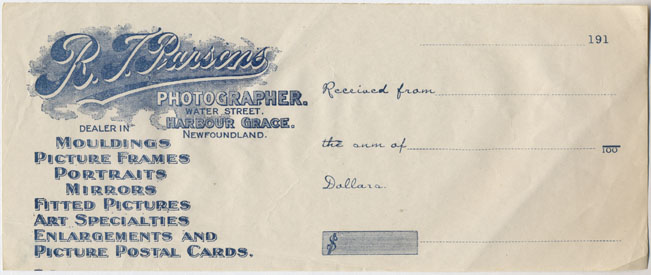 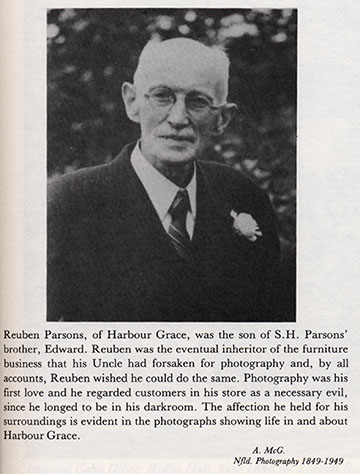
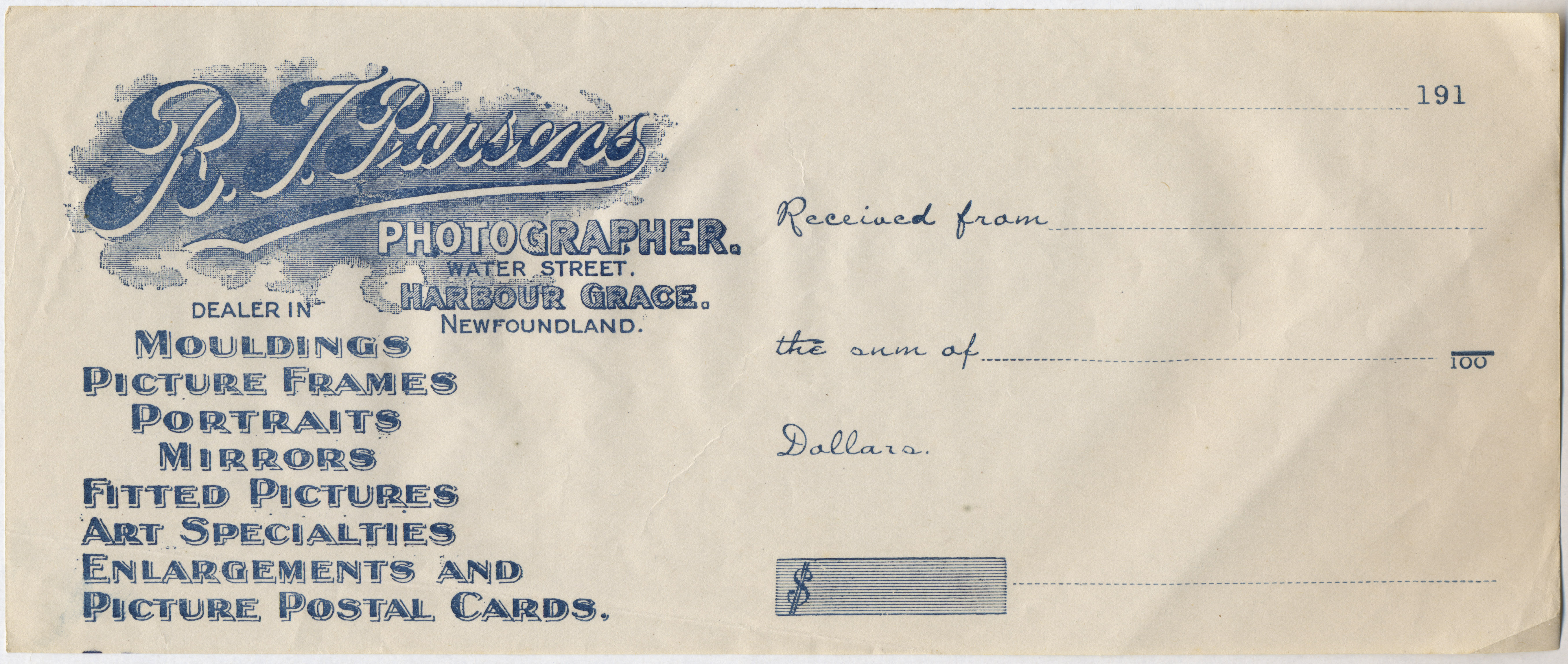
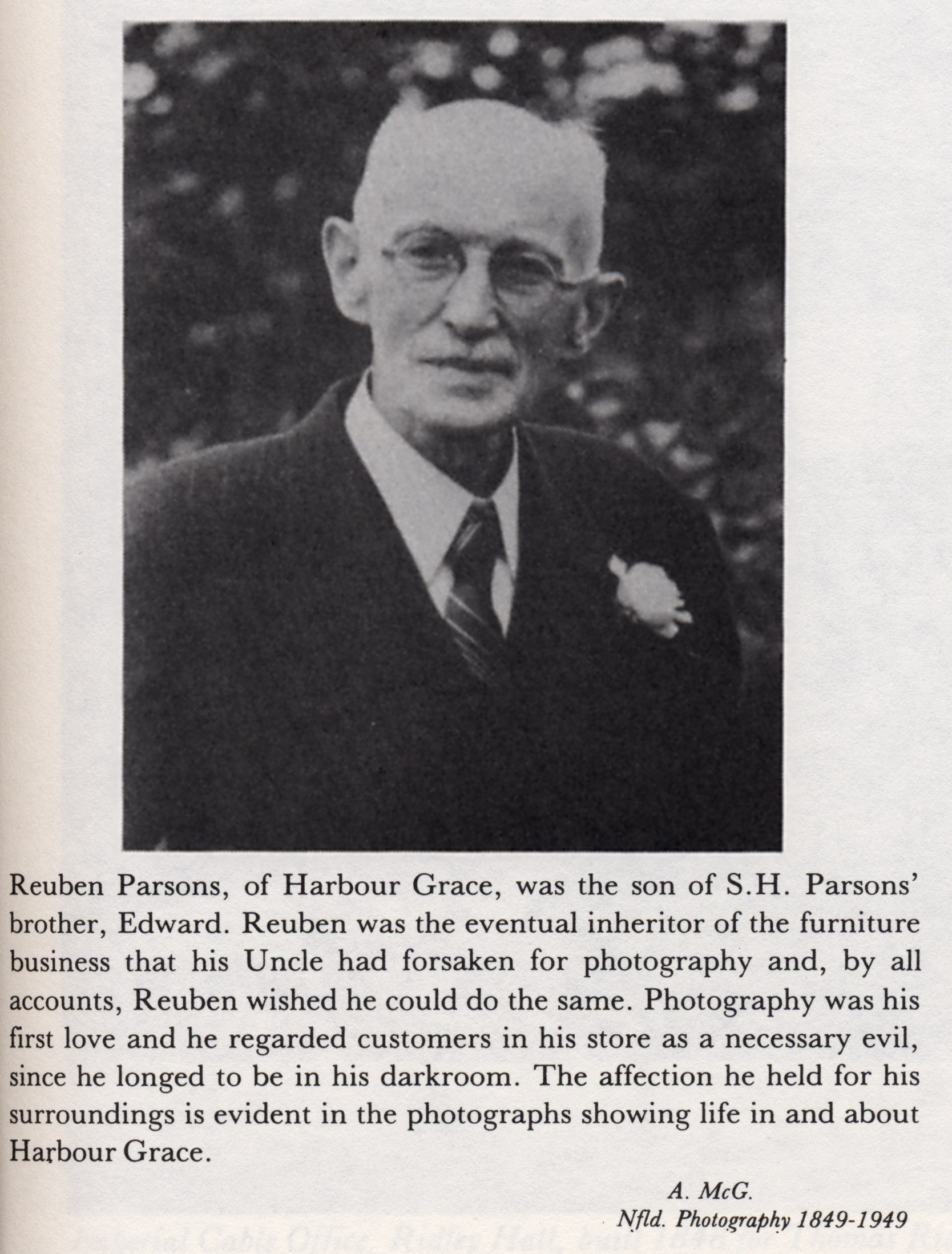
1910 Reuben Taylor Parsons' portrait and blank receipt from the Water Street location pictured above at the Emporium. Reuben was the nephew of famed Newfoundland photographer Simon Henrey Parsons who had started the business in 1870 at that location, also operating a photography studio, cabinet making, upholstery, and undertaking business. He later moved to St. Johns to expand his photography business in 1872 whie his brothers Alexander, Edward and his son Reuben, operated the Harbor Grace business. Receipt and book from Parsons Collection |
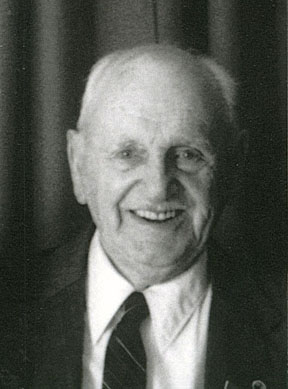
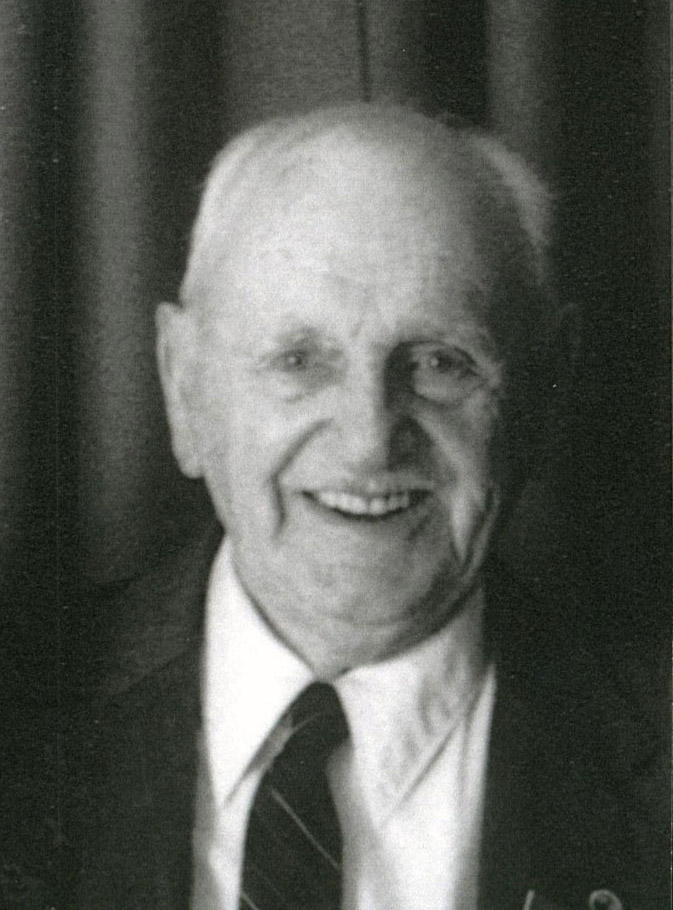
With three generations of photographers in his family tree, Bill Parsons continued to document Newfoundland history - photo taken about 1980. Photo from Community Stories |
From Harbor Grace Community Stories
Reuben Parsons was Harbour Grace's resident photographer.
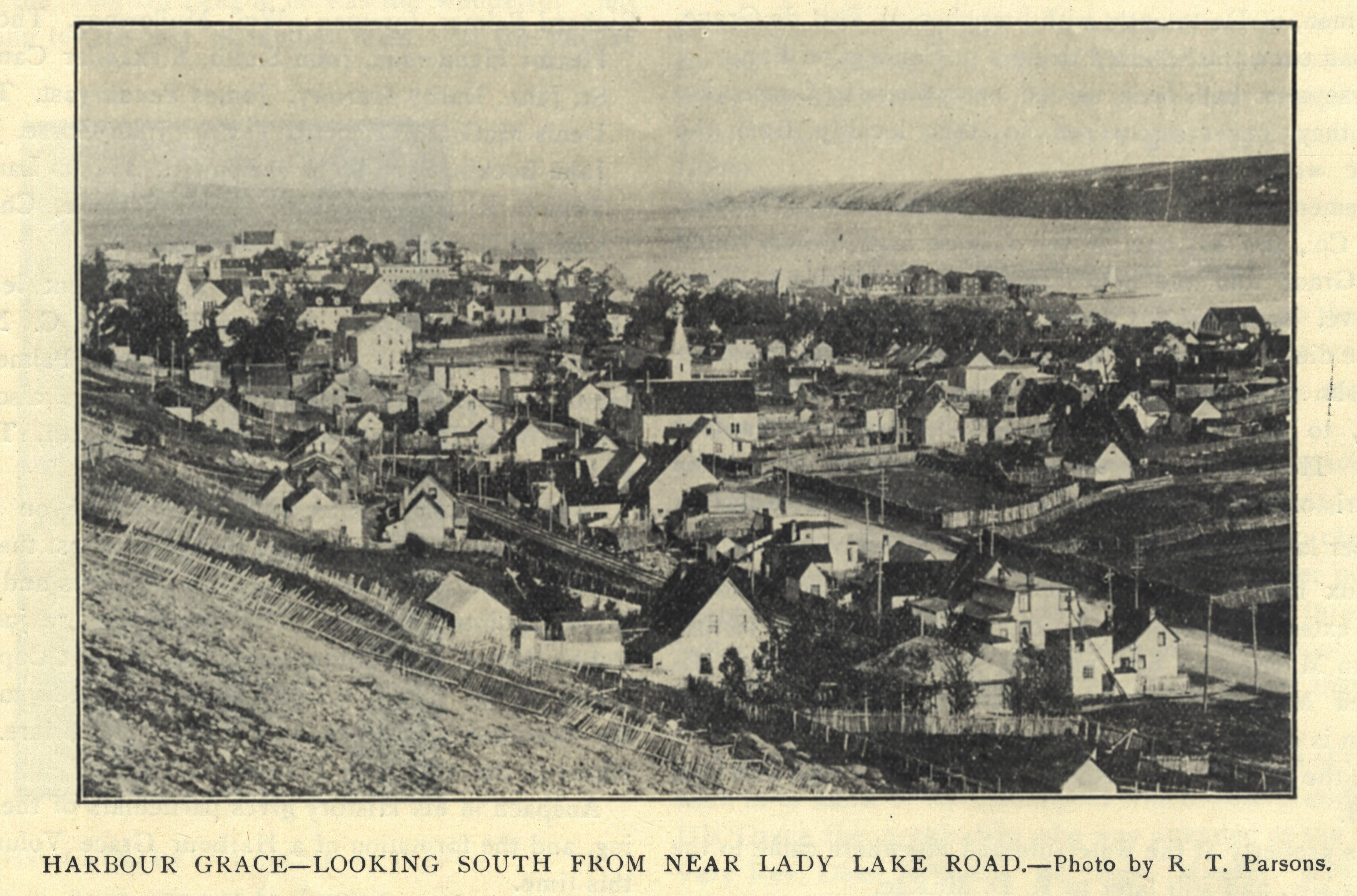
Although a furniture-maker by trade, Reuben's passion was photography - a hobby he inherited from his uncle, famed Newfoundland photographer Simeon Henry Parsons. Reuben extensively photographed his hometown in the early twentieth century, recording street scenes, landscapes, and local architecture.
He was also present for every transatlantic flight, capturing each arrival on glass plates with his large view camera. His remarkable photos are a lasting memory of this exciting era of aviation.
Similarly, his son Bill Parsons played a documentarian role. In 1929, at the age of 22, Bill worked as a stringer for the Associated Press (AP).
As their contact on the ground, he would send the news agency various details of each flight - the time of arrival and departure, the type of plane, the weather, and any other relevant information - for publication.
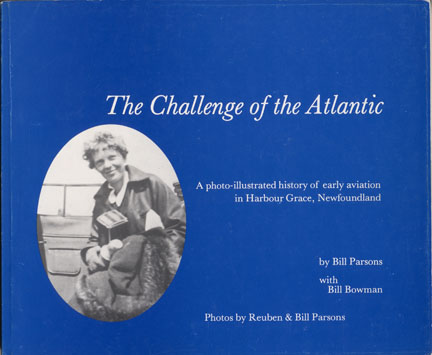
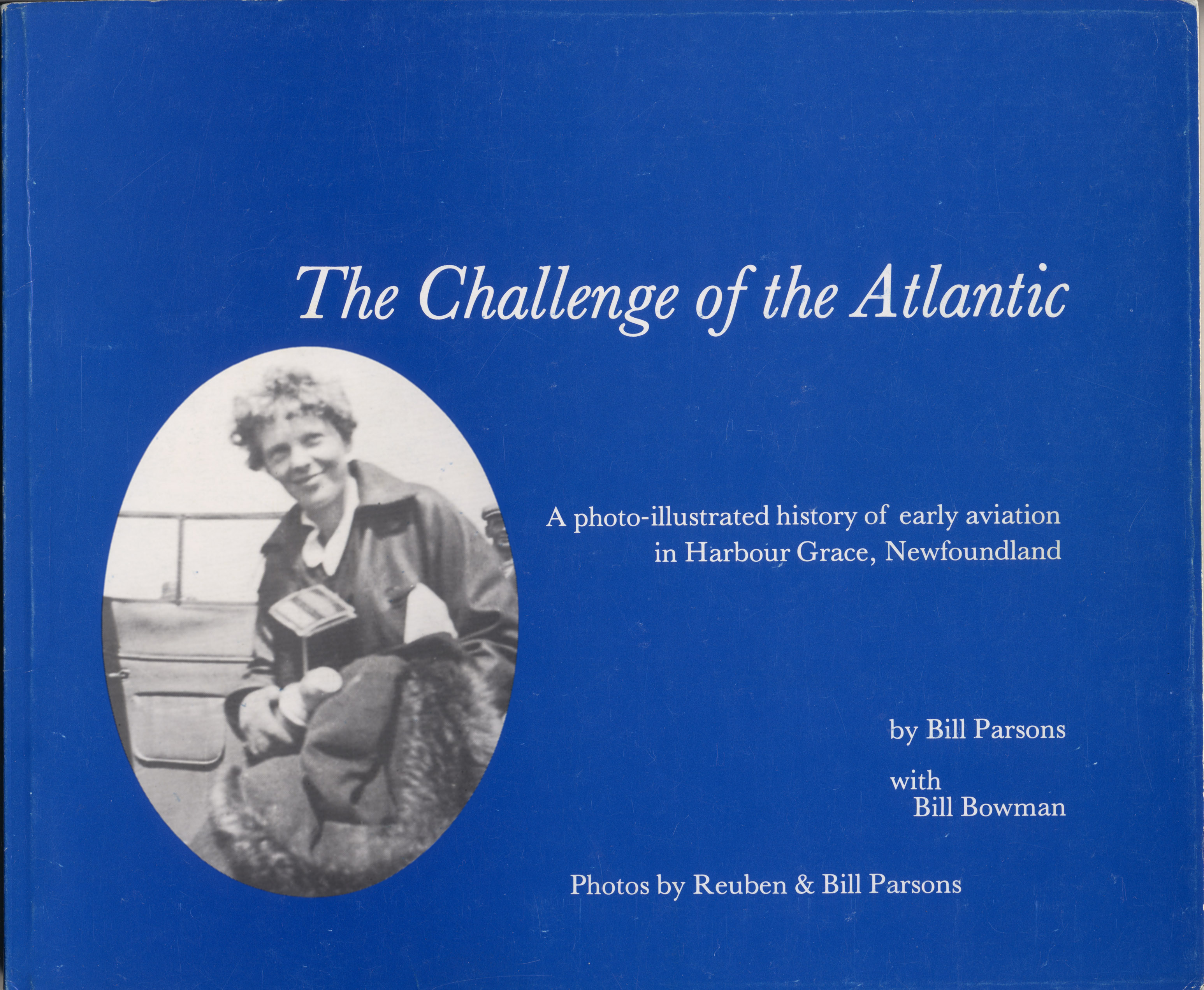
Bill Parsons' book documenting transatlantic flight from Harbor Grace, The Challenge of the Atlantic. From Parsons Collection |
However, the fragile nature of his father's glass-plated photographs made transportation to AP's Boston office difficult. Bill's solution was to take his own pictures using a smaller Kodak film camera. These film rolls would then be sent to Whitbourne, put aboard the express train to St. John's, and shipped to Boston.
The photos would usually arrive five days later and be published in various newspapers, such as the New York Times. Memorably, Bill captured Amelia Earhart just before she left the airstrip; in her right hand, one can see Rose Archibald's famous gift: a thermos of soup.
Years later, Bill collaborated with a local journalist, Bill Bowman, then editor of the regional newspaper, The Compass, to write a book on Harbour Grace aviation.
Published in 1983, The Challenge of the Atlantic is an illustrated catalogue of the heyday of transatlantic flight for this area. It features Parsons's research, memories, and original photographs. Though out of print today, the book remains a vital document of community memory.
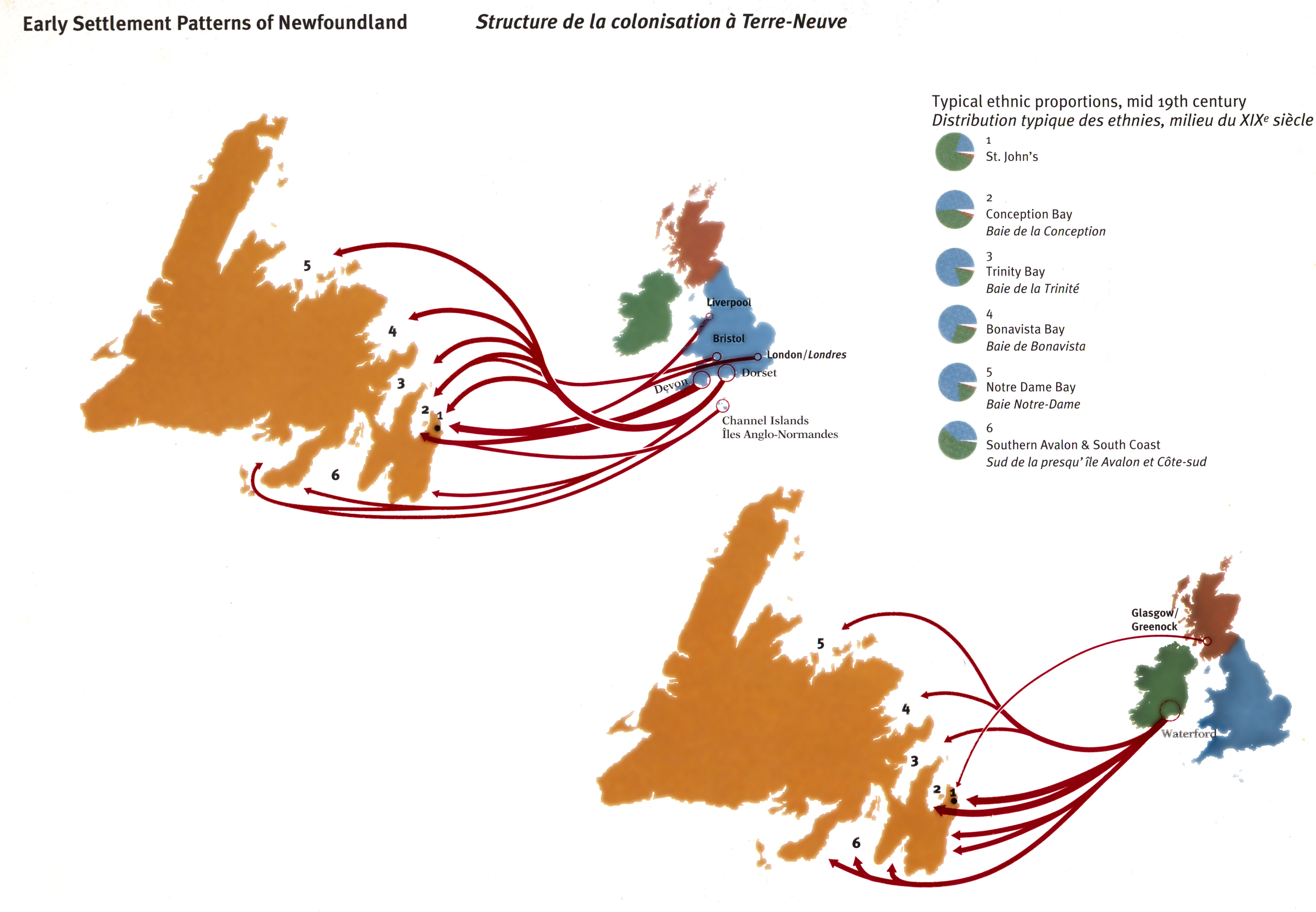
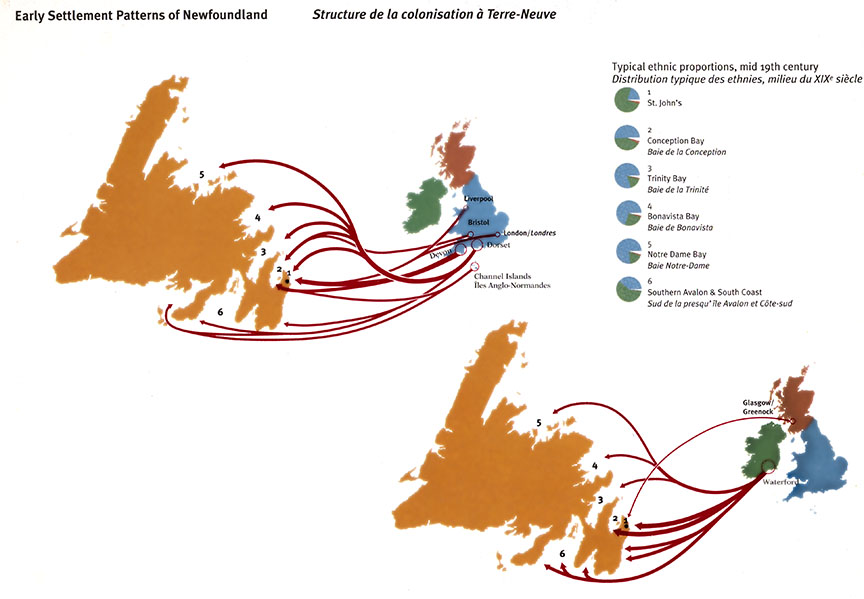 Map and text From Routes - Exploring the British Origins of Newfoundland Outport Furniture -
English Settlement in Newfoundland
by Dr. Gordon Handcock
Most Newfoundland settlers came from two areas in the Southwest of England. Those from South Devon, leaving from the ports of Teignmouth, Dartmouth and Plymouth, settled mainly in St. John's and Conception Bay, while emigrants from a region comprising Dorset, Western Hampshire (the New Forest Area, South Somerset and Southwest Wiltshire, took passage from the port of Poole, Dorset and settled mainly along the Northeast Coast, from Conception Bay north to Notre Dame Bay. Other important English homeland origins include the port cities of Bristol, London and Liverpool. The Channel Islands (Jersey and Guernsey) are also noteworthy as a source area.
Migration patterns were determined largely by merchants, the pattern of their shipping and the location of their trading establishments in Newfoundland.
Consequently, almost all of the English settlers in places such as Bay Bulls, Petty Harbour and Torbay came from South Devon. Settlers from Dorsetshire, Somerset and Hampshire were the dominant English settlers along the Northeast Coast, from Conception Bay north to Notre Dame Bay, mainly because the fishery and trade along this coast was dominated by merchants of Poole. Poole merchants transported servants and fishermen to their various headquarters in Newfoundland, notably Brigus, Bay Roberts and Carbonear in Conception Bay, as well as Trinity, Bonavista, Greenspond, Fogo and Twillingate. Poole merchants also brought out migrants to Placentia, Mortier Bay, Burin and Harbour Breton.
Bristol-born emigrants settled almost exclusively in Conception Bay around Harbour Grace, where for several centuries Bristol merchants had trading establishments. Channel Island merchants brought migrants who settled in Conception Bay including the Port de Grave / Bay Roberts area. After the American Revolution, however, most Channel Islanders settled along the South Coast. Most of the London and Liverpool emigrants to Newfoundland resided in St. John's as did most of the Scots who came mostly from the Glasgow and Greenock area. The Scots, along with Londoners and settlers from Liverpool, became prominent in the local resident merchant-class of St. John's. A few Scottish traders also settled in Conception Bay, in Trinity Bay and at Bonavista. |
See More Features and Travel
Destinations in the Gallery
|